Anthurium magnificum Care Guide
Anthurium Magnificum — Araceae family, exported from our East Java desk and shipped bare-root. Light, water, humidity, substrate, temperature, propagation and the dispatch details to confirm before transit, in one place.
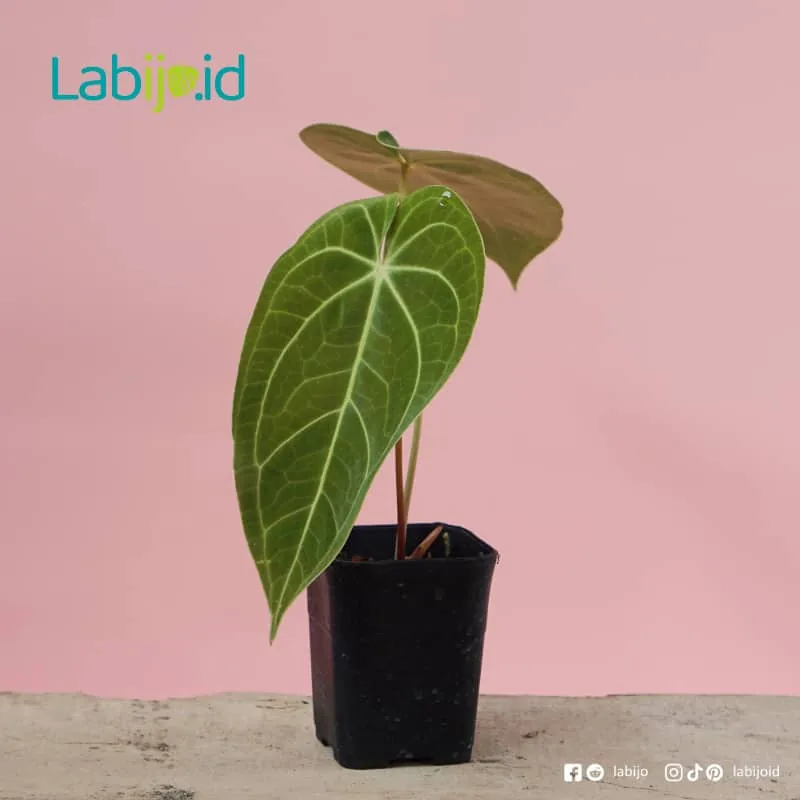
What to know first
Anthurium magnificum is a Colombian species with broad, heart-shaped blades and distinctly four-angled petioles. Use those characters alongside provenance and other botanical features when checking identity. The growing advice below is general Anthurium guidance, rather than a species-specific cultivation trial.
- A four-angled petiole is an identification clue; it cannot by itself authenticate a plant or exclude hybrid ancestry.
- Published tissue-culture research does not establish a household propagation method or rooting timetable.
- The supplier lists Medium Size, 3–4 Leaves. Request current photographs, measured dimensions and root condition.
Kew’s CATE description gives Anthurium magnificum a hypogeal stem, four-angled petioles with narrowly winged angles and broad cordate-ovate, coriaceous blades. The mature blade described there is 30–40 × 20–25 cm. Those measurements document described material rather than a fixed size limit for every cultivated plant.
Growing Anthurium magnificum
- LightGeneral Anthurium guidance: bright, indirect lightRHS recommends bright, indirect light for Anthuriums and protection from direct summer sun. This is genus-level indoor guidance; the botanical and propagation sources do not establish a species-specific light threshold or show that light determines blade shape in Anthurium magnificum.
- WaterGeneral Anthurium guidance: check the mix before wateringRHS advises watering Anthuriums as their compost approaches dryness and avoiding prolonged waterlogging. Check the plant and growing medium rather than using a fixed schedule; no cited study tests a watering interval for this species.
- HumidityGeneral Anthurium guidance: humid air with observationRHS describes humid air as general Anthurium guidance and notes that dry air can contribute to brown leaf edges. The cited species sources provide no tested relative-humidity target, nursery baseline or acclimatisation protocol for Anthurium magnificum.
- SubstrateGeneral Anthurium guidance: open, acidic and freely drainingRHS recommends an open, moisture-retentive but sharply draining acidic mix for Anthuriums. Treat that as a general starting point: the cited species research does not compare potting mixes or establish a recipe for Anthurium magnificum.
- TemperatureGeneral Anthurium guidance: maintain warmth and avoid cold draughtsRHS recommends warm indoor conditions for Anthuriums generally. Anthurium magnificum is recorded from wet Andean tropical environments, but distribution and elevation records do not establish its indoor minimum, maximum or root response to a particular temperature.
- PropagationResearch scope: regeneration has been studied in tissue cultureA 2021 study induced callus from leaf and petiole sections under sterile laboratory conditions and regenerated plants from petiole-derived callus. A 2023 study tested silver nitrate on established in-vitro shoots. Neither study establishes a home propagation method, rooting time or success rate.
Sources and growing guidance
- Kew Plants of the World Online: Anthurium magnificum Linden
Supports the accepted name, Colombian distribution, wet-tropical association and CATE morphology reproduced here; it is not an indoor cultivation or shipping trial.
- Catálogo de Plantas y Líquenes de Colombia: Anthurium magnificum
Supports Colombian endemism, Andean occurrence, the recorded 800–2125 m elevation range and herbaceous habit.
- International Aroid Society: Anthurium magnificum
Supports the comparison with Anthurium clarinervium. Petiole shape is an identification clue, not proof of identity or hybrid parentage.
- Hernández-Perez et al. (2021): Callus formation in Anthurium magnificum Linden
Reports callus induction and regeneration under sterile tissue-culture conditions; it does not establish household propagation methods or rooting times.
- Hernández-Perez et al. (2023): silver nitrate and in-vitro shoot growth
Reports effects of silver nitrate on established in-vitro shoots; it does not support adding silver nitrate to irrigation water or ordinary pot culture.
- Royal Horticultural Society: How to grow anthuriums
General Anthurium indoor-growing guidance. Its recommendations have not been validated specifically for Anthurium magnificum by the cited species research.
The four-angled petiole is a useful identification character. The International Aroid Society contrasts it with the round petiole of Anthurium clarinervium, while leaf shape, venation, inflorescence and provenance should also be considered. Petiole shape alone cannot authenticate a trade plant or exclude hybrid ancestry.
Bare-root export and transit
The species is endemic to Colombia and recorded from the Andes at 800–2125 m in the Colombian plant catalogue. Sources variously call it a herb or epiphytic subshrub, so those records do not justify describing it as a trailing basket plant or moss-pole climber. They also do not establish household care tolerances, shipping resilience or a post-transit recovery timetable.
How every consignment is prepared
- Root preparation100% Bare-root washed (zero soil, zero unsterilized peat).
- TreatmentSystemic broad-spectrum anti-fungal & bactericide dip treatment.
- Root wrapSterile Chilean AAA damp sphagnum moss protective root-envelope.
- Dispatch conditions to confirmConfirm the current leaf count, measured dimensions, root condition, packing method and proposed route with the export desk. The cited sources do not establish a species-specific transit window, survival rate or recovery time.
Questions buyers ask
How can I identify Anthurium magnificum?
Look for broad cordate-ovate blades and a distinctly four-angled petiole whose angles may be narrowly winged. Use those traits with venation, mature inflorescence and provenance; a square petiole by itself does not prove species identity or rule out a hybrid.
Is Anthurium magnificum a trailing or moss-pole plant?
The botanical sources describe a hypogeal stem and use herb or epiphytic-subshrub habit labels. They do not establish a pendant, trailing habit or a requirement for a moss pole. Assess the actual plant form from current whole-plant photographs before choosing support.
What should I confirm before ordering Anthurium magnificum?
The product field says Medium Size, 3–4 Leaves; it does not give measured dimensions, root condition or identity evidence. Request a current whole-plant photograph, leaf count, blade and petiole measurements, a clear petiole cross-section, rooting condition and dispatch format.
What the published literature calls this plant
A protologue is the original published description of a species. It helps you compare diagnostic characters — the features used to distinguish that species from similar plants. Compare those characters with photographs of the offered plant and its documented mother plant where available. A species description provides identification evidence; cultivation advice also needs evidence about growing conditions, as explained in the guidance above.
Anthurium magnificum Linden · Araceae
The accepted name in the GBIF Backbone Taxonomy, the plant taxonomic backbone.
Protologue citation: Cat. Pl. Exot. 19: 2 (1865)
Recorded native range: CO.
- Efecto del nitrato de plata en el cultivo in vitro de Anthurium magnificum Linden — Revista Colombiana de Biotecnología (2023)
Taxonomy from the GBIF Backbone Taxonomy. Open the backbone record.
Order Anthurium Magnificum
The supplier records this product as Medium Size, 3–4 Leaves. That field does not specify measured dimensions, root condition, propagation history, batch or identity evidence. Confirm those details and request current photographs of the offered stock before ordering. The minimum export consignment is 20 plants across single or mixed varieties; volume discounts start at 30 plants.
The commercial pages behind this guide
- How to import plants from IndonesiaThe full document-to-door sequence: bare-root preparation, Barantan certification, destination permits, inspection and arrival.
- Estimated shipping ratesFreight basis and indicative transit for a consignment, with the variables that move the price.
- Wholesale termsMinimum order, volume tiers, deposit, the document set, and the split of responsibility between exporter and importer.
- Live arrival guaranteeWhat the guarantee covers and how to report condition within the arrival window.