Direct Indonesian Nursery Sourcing
Acclimatized under controlled shadehouse nursery facilities in Java & Sumatra, Indonesia. Zero unverified wild-poaching.
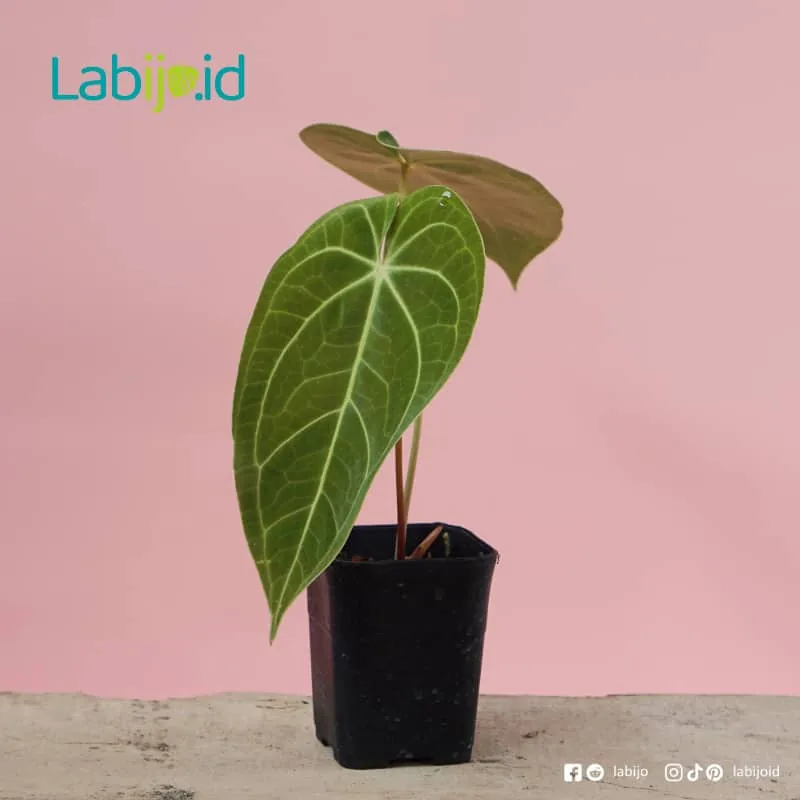
Anthurium Magnificum
Anthurium magnificum
Anthurium Magnificum (Anthurium magnificum) is catalogued under the Araceae family in the genus Anthurium, and ships from Java & Sumatra, Indonesia at $9.00 USD per plant FOB, export grade A+. The supplier's listing records grade Medium Size. Catalogue acclimatization difficulty is rated Connoisseur Collector.
Identification, research and what to check before buying ↓Care guide for Anthurium Magnificum →
Anthurium magnificum Linden · Araceae
The accepted name in the GBIF Backbone Taxonomy, the plant taxonomic backbone.
Protologue citation: Cat. Pl. Exot. 19: 2 (1865)
Recorded native range: CO.
A protologue is the original description of a species. It provides the naming context and diagnostic characters to compare when checking a plant’s identity. Other studies address their own research questions; their findings need to be read in that context before applying them to cultivation or the offered stock.
- Efecto del nitrato de plata en el cultivo in vitro de Anthurium magnificum Linden — Revista Colombiana de Biotecnología (2023)
Taxonomy from the GBIF Backbone Taxonomy, retrieved 2026-10-22. Open the backbone record.
Rated Connoisseur Collector from the catalogue category and display name alone. Ask the supplier for the stock-specific acclimatization protocol for this consignment before ordering.
What propagation research explains about Anthurium magnificum
Two studies follow different stages of laboratory propagation: forming callus from plant tissue, then growing regenerated shoots. Together they explain why a tissue-culture plant has a production history that matters when choosing its next growing environment.
Anthurium magnificum · Reviewed on
Petiole tissue formed callus and regenerated plants
The 2021 abstract reports a comparison of leaf and petiole sections on media containing different concentrations of the growth regulator 2,4-D. Petiole sections formed callus more readily than leaf sections, and petiole-derived callus regenerated plants. The authors describe watery, translucent callus from both tissues, yet report regeneration from the petiole material. (Hernández-Perez, García, Padrón, La O, Moreno-Bermúdez & Rivero, 2021)
For buyers: This shows why tissue response and successful regeneration must be assessed separately. A report of callus formation alone is less informative than evidence that shoots and complete plants developed.
Scope: Read at abstract level through AGRIS. These are sterile tissue-culture treatments, not a demonstration that a detached leaf or petiole will root in household potting mix.
Silver nitrate changed roots and leaf area differently
The 2023 full text compares shoots in sterile nutrient medium with and without silver nitrate over 60 days. At 1.0 mg/L, root number and length exceeded the control and higher doses; height did not differ significantly from the control. Silver nitrate increased leaf area, without significant differences in leaf number. The highest dose reduced root performance. (Hernández-Perez, Posada-Pérez, Barbón, Gómez-Kosky, Padrón & La O, 2023)
For buyers: Larger foliage can occur without more leaves. Root development adds information that height alone misses, and the dose response shows that more additive need not improve growth.
Scope: Full text read via the linked copy. Ethylene inhibition is the authors’ proposed explanation. This is no household watering protocol or post-culture survival trial.
Putting the research into practice
Producing callus and obtaining a complete plant are separate achievements. The later experiment follows the next stage: growing regenerated shoots. Our interpretation for buyers is to match your setup to the plant’s current stage, whether still in culture, undergoing acclimatisation or established in substrate. Assess roots and new growth together when judging readiness for your growing environment.
Supplier-reported facts
- Catalogue item
- Anthurium Magnificum
- Supplier form / grade
- Medium Size
Still to confirm with the supplier
- Establish whether the offered plant is in vitro, undergoing acclimatisation, or already growing independently in substrate.
- Compare current root development, new growth and measured plant dimensions; leaf count alone gives an incomplete picture of establishment.
- Keep propagation history separate from species identity: these experiments do not authenticate an offered plant or exclude hybrid ancestry.
References
- Callus formation in Anthurium magnificum Linden
Hernández-Perez, García, Padrón, La O, Moreno-Bermúdez & Rivero (2021). Biotecnología Vegetal, 21(2), 103–112; abstract reproduced in AGRIS.
Reviewed from: Abstract only
- Effect of silver nitrate (AgNO3) on the in vitro growth of Anthurium magnificum Linden shoots
Hernández-Perez, Posada-Pérez, Barbón, Gómez-Kosky, Padrón & La O (2023). Revista Colombiana de Biotecnología, 25(2), 88–96; doi:10.15446/rev.colomb.biote.v25n2.110056.
Reviewed from: Full text
“Full text” records the version our editors read. It does not mean the publisher offers free public access; some articles require a subscription.How we review and explain sources.
Botanical and ethnobotanical information on this page is provided for horticultural reference only. It is not medical advice and is not a substitute for professional medical guidance.
International Trade Compliance & Regulatory Guidance
Catalog regulatory tags represent informational screening indicators only and do not constitute an advance permit, clearance, or government certification. Import requirements vary by taxon, consignment volume, and destination authority; buyers should confirm requirements with their destination plant health agency or our export desk prior to order.
USDA APHIS Guidance (7 CFR 319.37)
Screening reflects general admissibility guidelines under USDA APHIS regulations. Actual entry requirements depend on current taxon manuals, port routing (such as PIS Miami, JFK, LAX), and permit category (PPQ 587). Buyer must verify applicable permit and labeling requirements with USDA APHIS or our export desk before ordering.
Indonesian Agricultural Quarantine (Barantan)
Consignments must be submitted for PPK (Pemeriksaan Karantina Tumbuhan) inspection by Badan Karantina Indonesia prior to export dispatch. Phytosanitary certificates are issued only upon successful official examination; catalog tags are screening indicators and do not constitute an advance certificate guarantee.
EU TRACES-NT & CHED-PP (Reg 2016/2031)
European Union plant health directives require CHED-PP pre-notification in TRACES-NT and arrival through designated Border Control Posts (such as AMS or FRA). Importers should confirm current high-risk lists, quarantine status, and member state rules before ordering.
Nursery grade source: Supplier classification at the nursery. The Medium Size grade is the supplier's record for this SKU, quoted as published.
Export Packaging & Root Preservation Standard
Growing guidance & dispatch checks
Kew Plants of the World Online: Anthurium magnificum Linden — Supports the accepted name, Colombian distribution, wet-tropical association and CATE morphology reproduced here; it is not an indoor cultivation or shipping trial.
Catálogo de Plantas y Líquenes de Colombia: Anthurium magnificum — Supports Colombian endemism, Andean occurrence, the recorded 800–2125 m elevation range and herbaceous habit.
International Aroid Society: Anthurium magnificum — Supports the comparison with Anthurium clarinervium. Petiole shape is an identification clue, not proof of identity or hybrid parentage.
Hernández-Perez et al. (2021): Callus formation in Anthurium magnificum Linden — Reports callus induction and regeneration under sterile tissue-culture conditions; it does not establish household propagation methods or rooting times.
Hernández-Perez et al. (2023): silver nitrate and in-vitro shoot growth — Reports effects of silver nitrate on established in-vitro shoots; it does not support adding silver nitrate to irrigation water or ordinary pot culture.
Royal Horticultural Society: How to grow anthuriums — General Anthurium indoor-growing guidance. Its recommendations have not been validated specifically for Anthurium magnificum by the cited species research.
Source-backed care guidance; retain the source limits below. Nursery conditions must be confirmed for the offered stock and are not measured care tolerances. Inspect roots and foliage on arrival, document concerns, and ask the export desk for stock-specific watering and acclimatization advice.
Related Species in Aroids & Rare Foliage
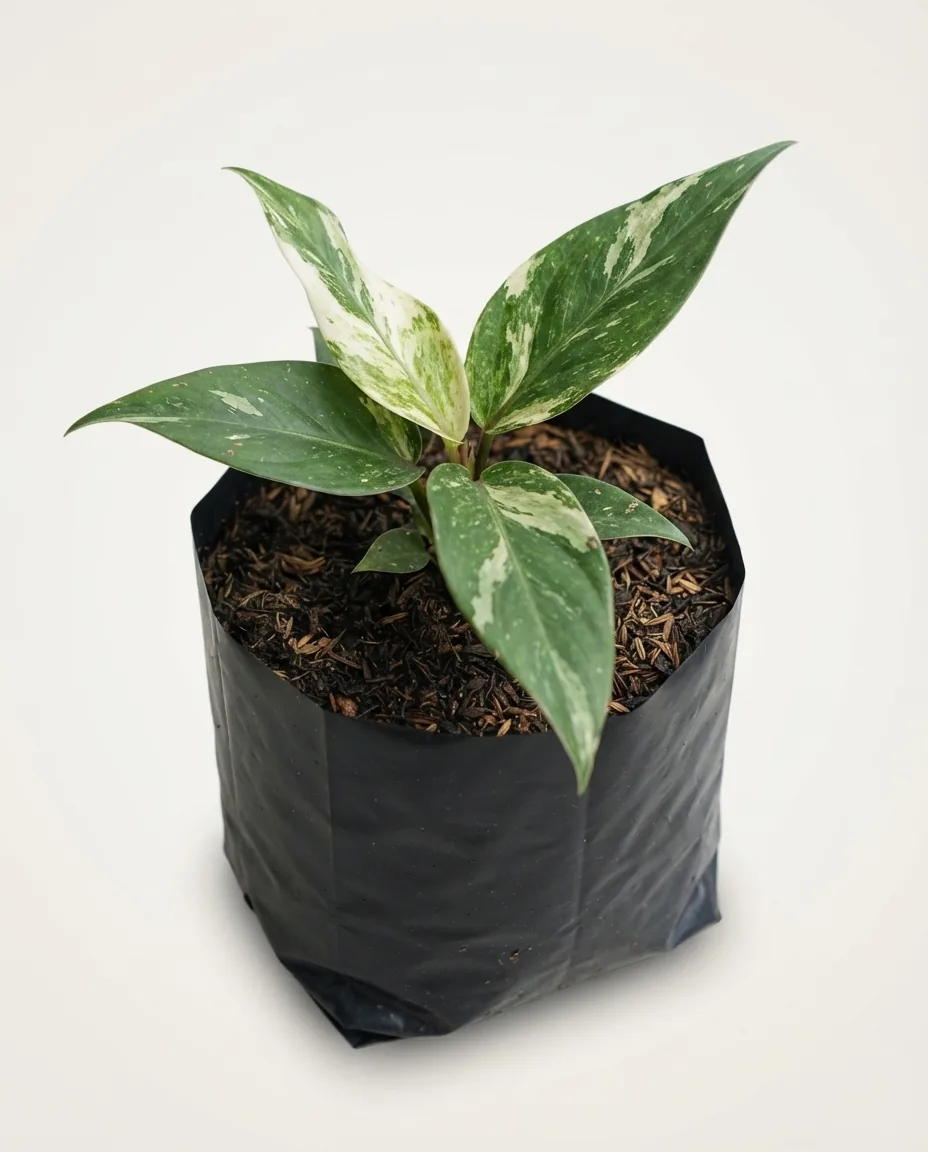
Anthurium Hookerii Pink Polkadot
Origin: Java & Sumatra, Indonesia
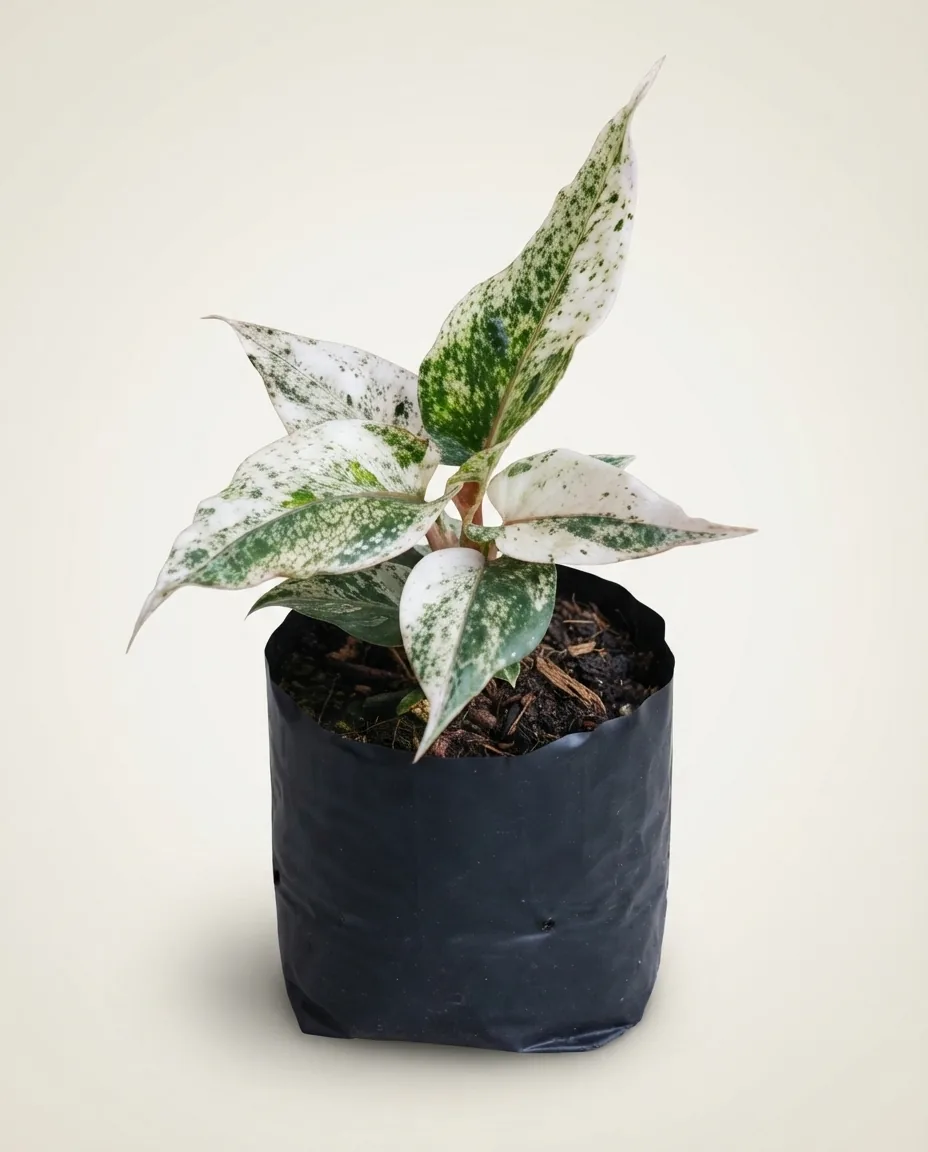
Anthurium Hookerii Pink
Origin: Java & Sumatra, Indonesia
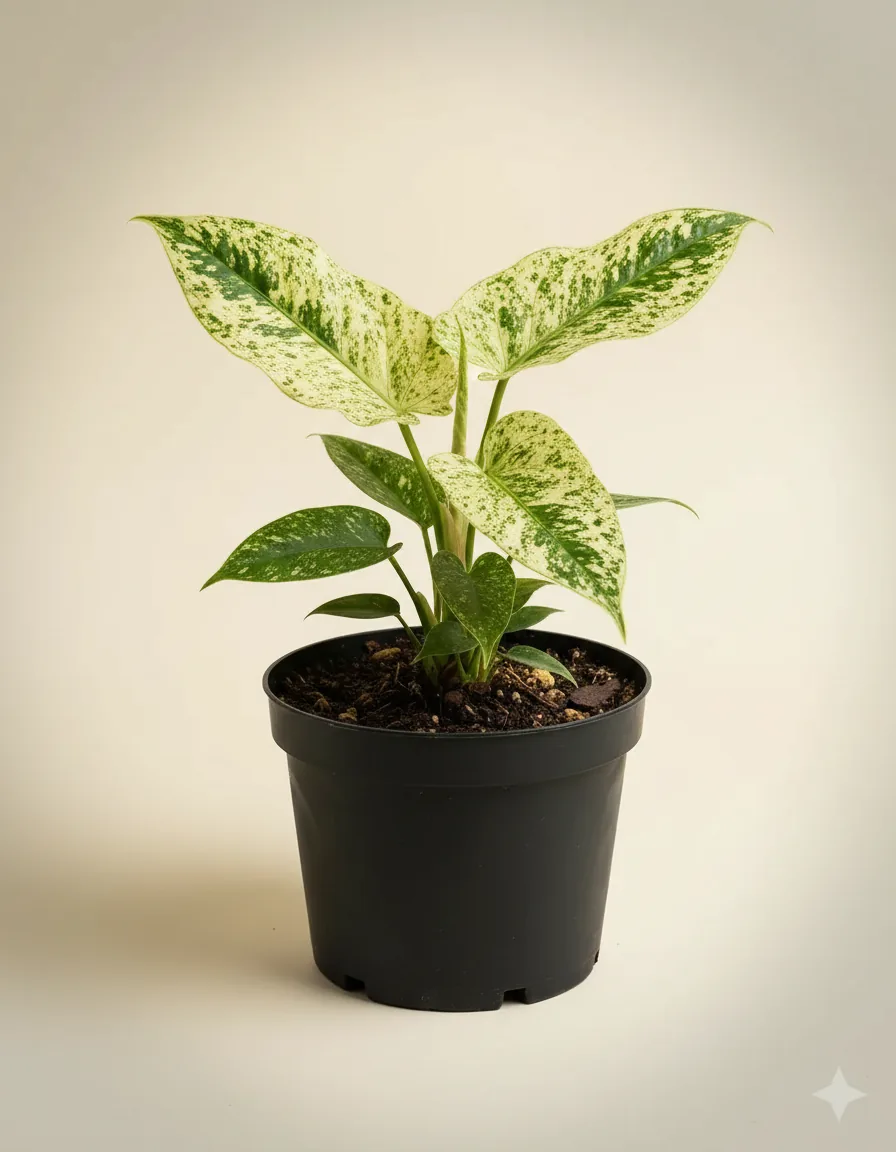
Anthurium Hookerii Dalmatian
Origin: Java & Sumatra, Indonesia
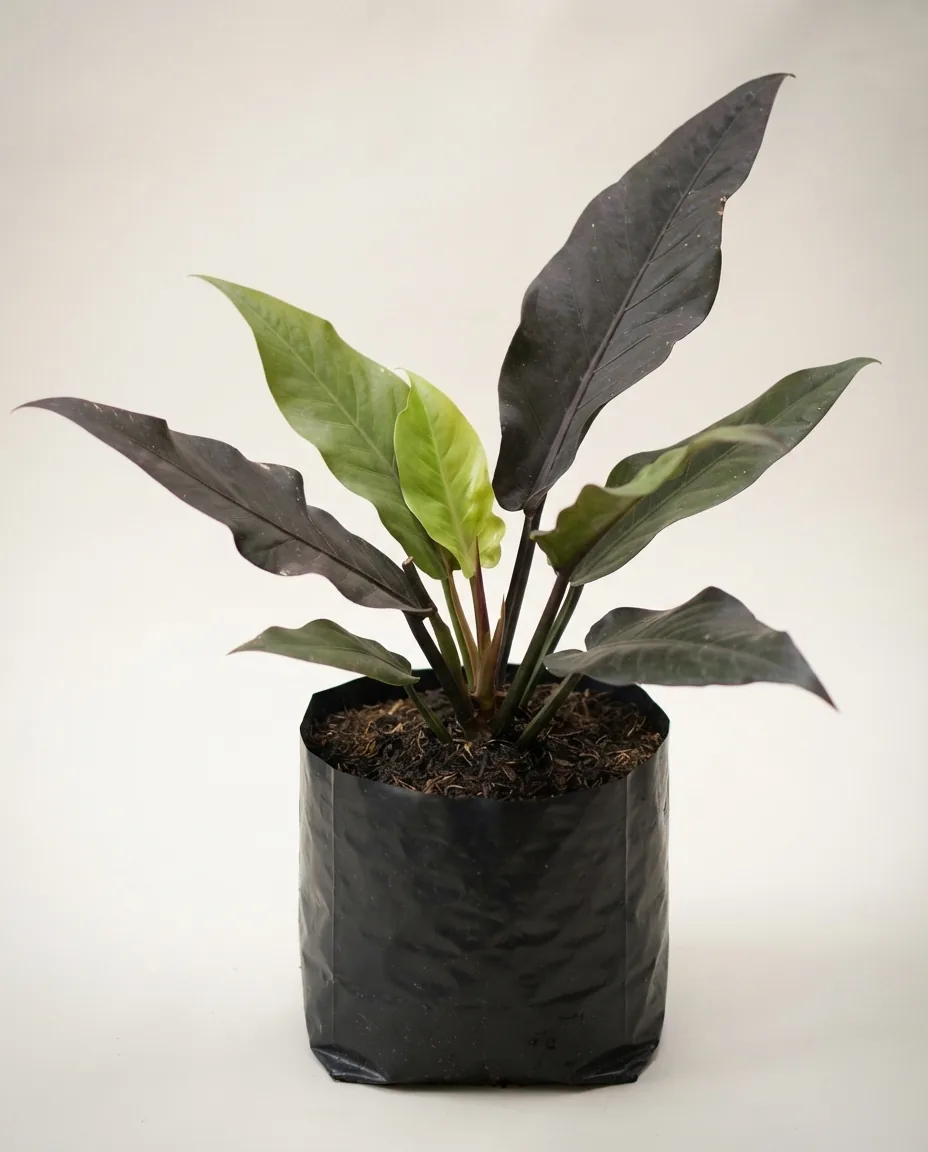
Anthurium Hookerii Black
Origin: Java & Sumatra, Indonesia
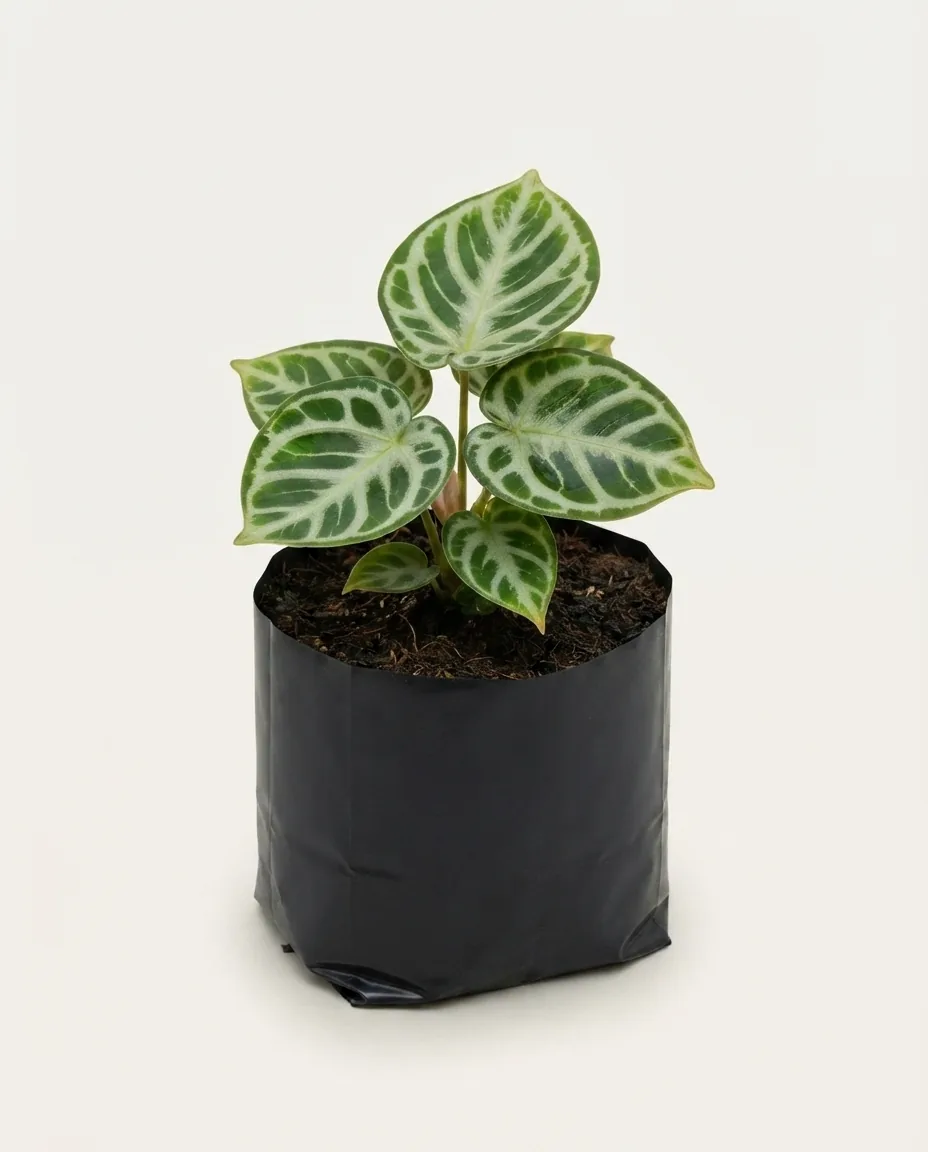
Anthurium Dorayaki Orthodox
Origin: Java & Sumatra, Indonesia
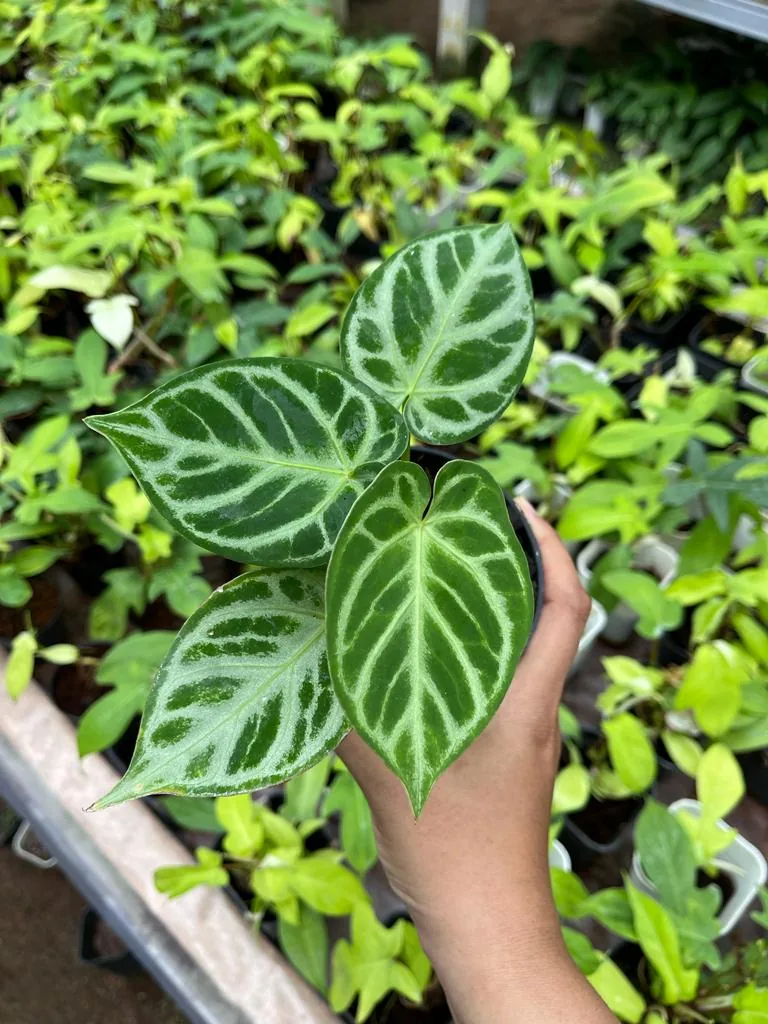
Anthurium Dorayaki Silver
Origin: Java & Sumatra, Indonesia