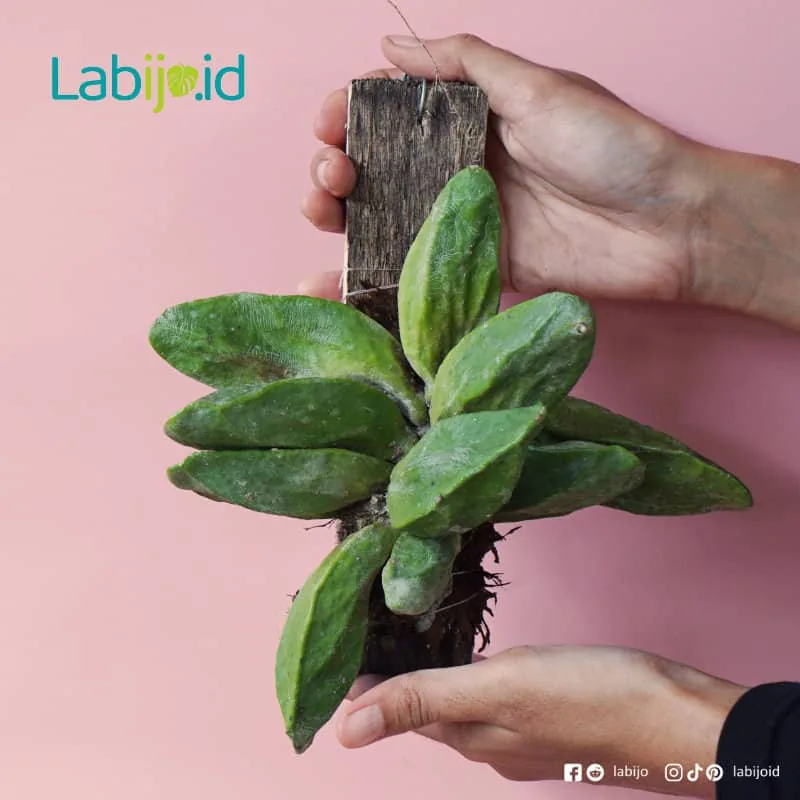
Direct Indonesian Nursery Sourcing
Acclimatized under controlled shadehouse nursery facilities in Java & Sumatra, Indonesia. Zero unverified wild-poaching.
Dischidia Major
Dischidia major
Dischidia Major (Dischidia major) is catalogued under the Apocynaceae family in the genus Dischidia, and ships from Java & Sumatra, Indonesia at $14.00 USD per plant FOB, export grade A+. Catalogue acclimatization difficulty is rated Intermediate.
Identification, research and what to check before buying ↓Care guide for Dischidia Major →
Dischidia major (Vahl) Merr. · Apocynaceae
The accepted name in the GBIF Backbone Taxonomy, the plant taxonomic backbone.
Protologue citation: Merr. (1917). In: Interpr. Rumph. Herb. Amboin. 437.
A protologue is the original description of a species. It provides the naming context and diagnostic characters to compare when checking a plant’s identity. Other studies address their own research questions; their findings need to be read in that context before applying them to cultivation or the offered stock.
- HOẠT TÍNH ỨC CHẾ XANTHINE OXIDASE VÀ KHÁNG UNG THƯ CỦA CAO CHIẾT DÂY MỎ QUẠ (Dischidia major (Vahl) Merr.) PHÚ QUỐC — Tạp chí Khoa học (2025)
- Crucial Role of Surfactants in Improving the Extraction Efficiency of β-Amyrin from Dischidia major Using Ultrasound-Assisted Extraction Coupled with Gas Bubble Flotation — Langmuir (2022)
- The symbiosis between Philidris ants and the ant-plant Dischidia major includes fungal and algal associates — Symbiosis (2021)
Taxonomy from the GBIF Backbone Taxonomy, retrieved 2026-10-22. Open the backbone record.
Rated Intermediate from the catalogue category and display name alone. Ask the supplier for the stock-specific acclimatization protocol for this consignment before ordering.
Inside Dischidia major pitchers: ants, microbes and nutrient exchange
The hollow leaves of this epiphyte create living spaces with ecological functions. Field studies examine the occupants and nutrient pathways, while extraction papers investigate compounds removed from plant material. Each kind of research answers a different question about the same species.
Dischidia major · Reviewed on
Pitcher interiors supported a mixed microbial community
Blatrix and colleagues investigated ant-occupied plants at Rayong and Trat in southeastern Thailand using morphological and molecular methods. Their abstract describes a black and green inner lining containing intermingled algae and fungi. Microscopy suggested Trebouxia and trentepohliacean algae; fungal sampling and cultures identified Chaetothyriales and Capnodiales. The authors considered most fungal associates likely to be widespread species. (Blatrix, Kidyoo, Kidyoo, Piapukiew, Satjarak, Paliyavuth, Boonchai & McKey, 2021)
For buyers: The pitcher houses a community extending beyond the visible ants. As an interpretation, colour inside a wild pitcher cannot alone identify a microbe or establish whether it benefits the plant; appearance and organism identity are different kinds of evidence.
Scope: Only the publisher abstract was read. These observations concern ant-colonised plants at two sites, and do not establish microbial functions, a required inoculum, or a diagnosis for dark tissue on a cultivated plant.
Isotopes linked ants with carbon and nitrogen acquisition
At Bako National Park in Sarawak, Treseder and colleagues compared stable-isotope signatures in plants, ants and potential nutrient sources. They calculated contributions to occupied plants from ant-associated respiration and debris deposited inside pitchers. Roots entering these cavities place absorbing tissue beside accumulated material, while internal leaf surfaces provide a route for carbon dioxide uptake. (Treseder, Davidson & Ehleringer, 1995)
For buyers: This gives the pitcher a nutritional context: housing ants can bring resources to an epiphyte living above the soil. It also explains why the roots within a pitcher are part of the plant’s nutrient-acquisition structure.
Scope: The article text was accessible in an institutional repository copy. Its isotope-based estimates concern sampled field associations; they are not universal nutrient budgets, fertiliser doses or proof that all cultivated plants need ants.
Extraction efficiency measures recovery of a chemical
The 2022 abstract describes ultrasound-assisted extraction of β-amyrin followed by gas bubble flotation. Cationic surfactants improved recovery at the air–liquid interface, and the collected foam selectively concentrated β-amyrin. The researchers used chromatography to quantify the compound in plant material and extracts. (Hoang, Phan, Duong, Tran, Nguyen & Phan, 2022)
For buyers: The reported improvement belongs to a separation process after extraction. It explains how researchers recover a plant compound, rather than showing that surfactants improve growth or that a living plant has a particular ornamental quality.
Scope: Read at abstract level from the publisher’s indexed abstract. No full-text review of extraction controls was possible; the study supplies no cultivation or household application protocol.
Extract activity was measured in laboratory assays
The 2025 publisher abstract reports tests of a methanol extract from Phu Quoc material. The extract inhibited xanthine oxidase and proliferation of HepG2 and MCF7 cell lines, and was also assessed on HEK293 cells. The authors measured several groups of plant compounds in the extract. (Nguyen Duc Hien, Truong Quoc Hung & Nguyen Quoc Trung, 2025)
For buyers: These findings explain the species’ chemical research interest. An extracted mixture interacting with an enzyme or cultured cells is a different experimental object from the intact ornamental plant being purchased.
Scope: Only the abstract was read. These assays do not establish human treatment efficacy, safe use or a medicinal specification for sale plants, and provide no household care evidence.
Putting the research into practice
Read a pitcher as a habitat as well as a leaf. The Thai microbial survey documents a community inside ant-occupied pitchers; the Sarawak isotope study examines nutrient acquisition associated with ants. Together they help explain the biological interest of the hollow leaves. Our interpretation for collectors is to observe leaf forms, attachment roots and pitcher condition as parts of the plant’s structure. Field associations do not establish that a cultivated specimen must contain the same organisms. Extraction research adds a separate chemical perspective: concentrating a compound or testing an extract says little about how a living specimen should be watered or maintained.
Supplier-reported facts
- Catalogue item
- Dischidia Major
Still to confirm with the supplier
- Compare whole-plant photographs showing flat leaves, hollow pitchers and attachment roots; record which leaf forms the offered specimen currently carries.
- Assess current rooting and pitcher condition separately from claims about wild ant or microbial partners.
- Choose a plant for its documented condition and ornamental form; chemical assay results do not specify the composition or performance of the offered specimen.
References
- The symbiosis between Philidris ants and the ant-plant Dischidia major includes fungal and algal associates
Blatrix, Kidyoo, Kidyoo, Piapukiew, Satjarak, Paliyavuth, Boonchai & McKey (2021). Symbiosis, 83, 305–315.
Reviewed from: Abstract only
- Absorption of ant-provided carbon dioxide and nitrogen by a tropical epiphyte
Treseder, Davidson & Ehleringer (1995). Nature, 375, 137–139; doi:10.1038/375137a0.
Reviewed from: Full text
- Crucial Role of Surfactants in Improving the Extraction Efficiency of β-Amyrin from Dischidia major Using Ultrasound-Assisted Extraction Coupled with Gas Bubble Flotation
Hoang, Phan, Duong, Tran, Nguyen & Phan (2022). Langmuir, 38(30), 9285–9293.
Reviewed from: Abstract only
- Xanthine oxidase inhibitory and anticancer activities of Dischidia major (Vahl) Merr. extract from Phu Quoc
Nguyen Duc Hien, Truong Quoc Hung & Nguyen Quoc Trung (2025). Ho Chi Minh City University of Education Journal of Science, 22(6), 1047–1055; doi:10.54607/hcmue.js.22.6.4648(2025).
Reviewed from: Abstract only
“Full text” records the version our editors read. It does not mean the publisher offers free public access; some articles require a subscription.How we review and explain sources.
Botanical and ethnobotanical information on this page is provided for horticultural reference only. It is not medical advice and is not a substitute for professional medical guidance.
International Trade Compliance & Regulatory Guidance
Catalog regulatory tags represent informational screening indicators only and do not constitute an advance permit, clearance, or government certification. Import requirements vary by taxon, consignment volume, and destination authority; buyers should confirm requirements with their destination plant health agency or our export desk prior to order.
USDA APHIS Guidance (7 CFR 319.37)
Screening reflects general admissibility guidelines under USDA APHIS regulations. Actual entry requirements depend on current taxon manuals, port routing (such as PIS Miami, JFK, LAX), and permit category (PPQ 587). Buyer must verify applicable permit and labeling requirements with USDA APHIS or our export desk before ordering.
Indonesian Agricultural Quarantine (Barantan)
Consignments must be submitted for PPK (Pemeriksaan Karantina Tumbuhan) inspection by Badan Karantina Indonesia prior to export dispatch. Phytosanitary certificates are issued only upon successful official examination; catalog tags are screening indicators and do not constitute an advance certificate guarantee.
EU TRACES-NT & CHED-PP (Reg 2016/2031)
European Union plant health directives require CHED-PP pre-notification in TRACES-NT and arrival through designated Border Control Posts (such as AMS or FRA). Importers should confirm current high-risk lists, quarantine status, and member state rules before ordering.
Export Packaging & Root Preservation Standard
Growing guidance & dispatch checks
Rintz (1980), The Peninsular Malayan species of Dischidia — Field and herbarium treatment supporting morphology, two leaf forms, climbing epiphytic habit, regional distribution and habitat; it does not establish current stock condition or indoor care targets.
Kew Plants of the World Online — Dischidia major (Vahl) Merr. — Current accepted name, climbing-epiphyte habit, wet-tropical biome and broad native distribution; it does not provide a tested cultivation protocol.
Treseder, Davidson & Ehleringer (1995), Absorption of ant-provided carbon dioxide and nitrogen by a tropical epiphyte — Stable-isotope study of ant-associated nutrient acquisition at Bako National Park, Sarawak; its site-specific results do not establish indoor care or universal nutrient percentages.
Peeters & Wiwatwitaya (2014), Philidris ants living inside Dischidia epiphytes from Thailand — Documents pitcher occupancy and nest structure in two Thai habitats, and shows that the studied Philidris association was not obligate for the ant; it does not test cultivation or transit.
Source-backed care guidance; retain the source limits below. Nursery conditions must be confirmed for the offered stock and are not measured care tolerances. Inspect roots and foliage on arrival, document concerns, and ask the export desk for stock-specific watering and acclimatization advice.
Related Species in Hoya & Epiphytes
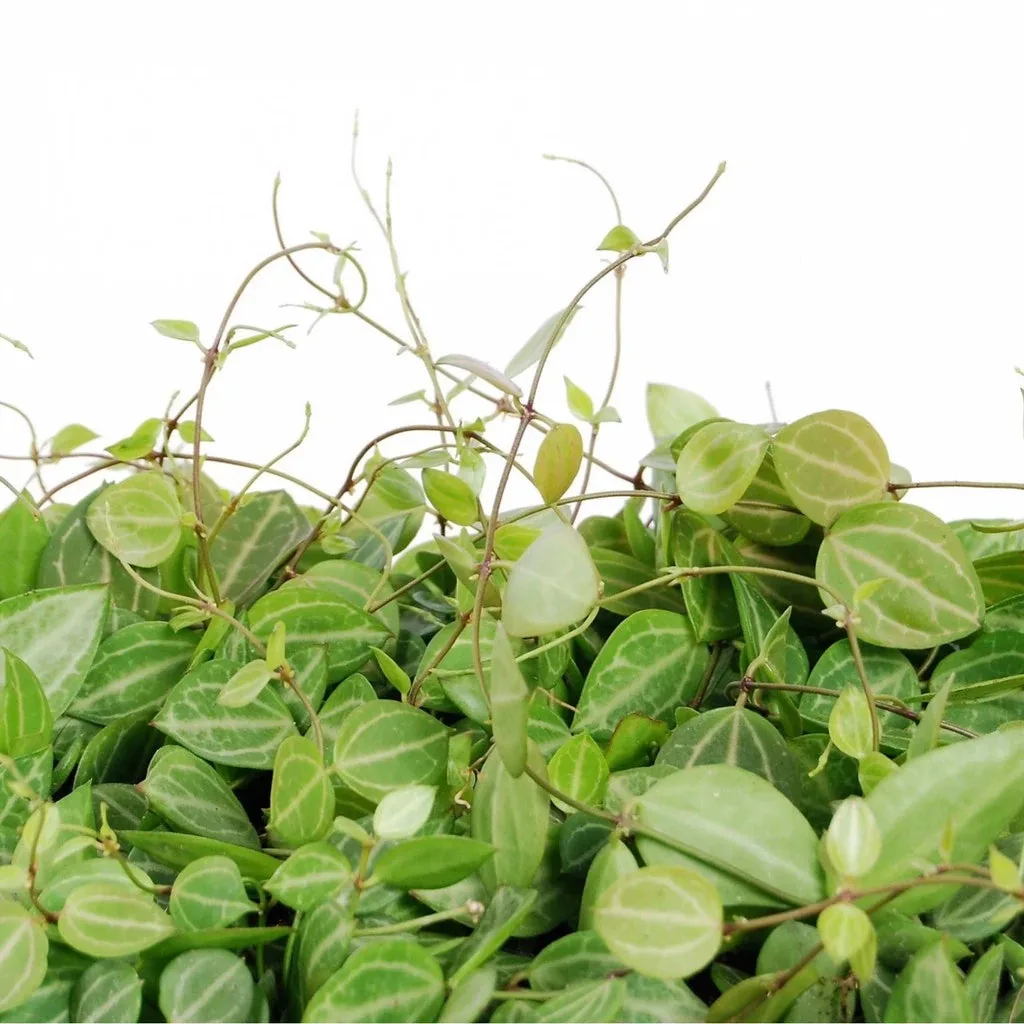
Dischidia Ovata
Origin: Java & Sumatra, Indonesia
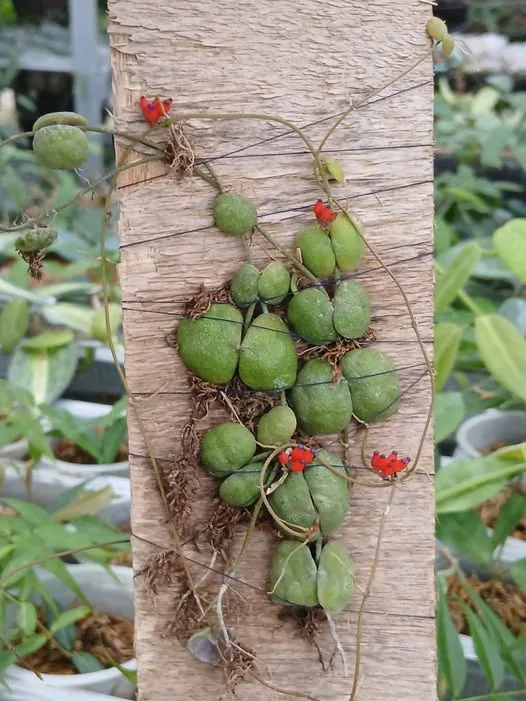
Dischidia Cochleata
Origin: Java & Sumatra, Indonesia
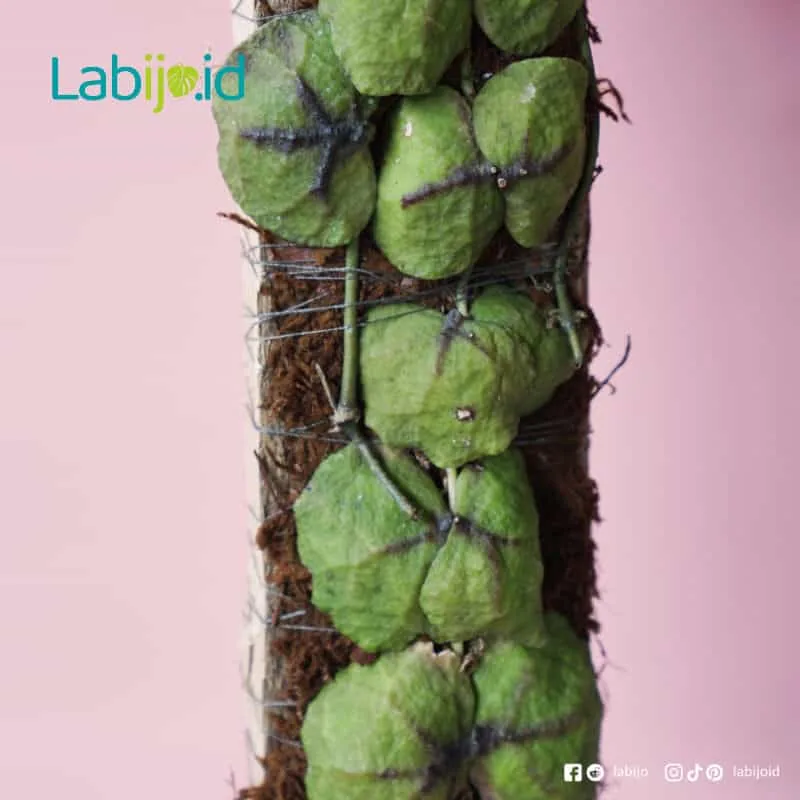
Dischidia Imbricata Butterfly
Origin: Java & Sumatra, Indonesia
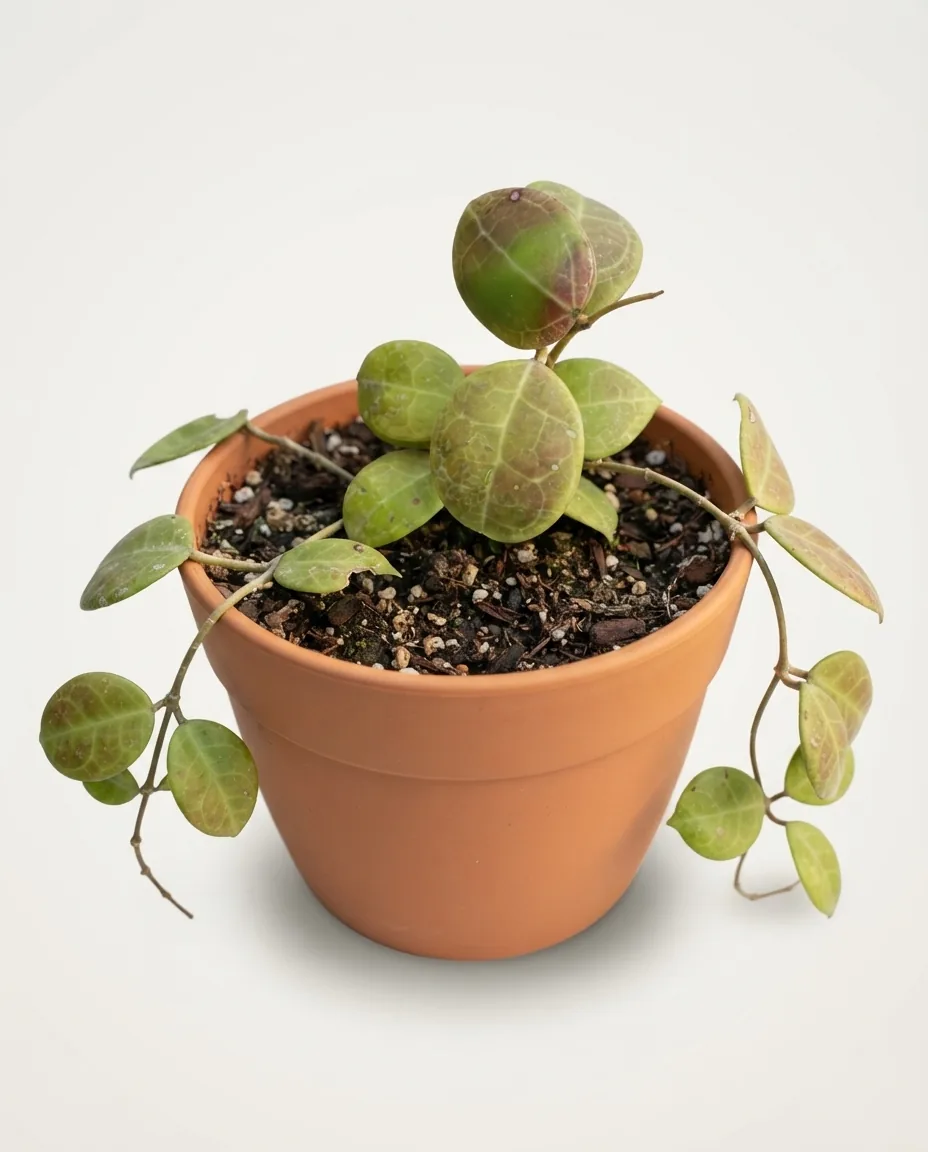
Hoya Sp Sulawesi Red
Origin: Java & Sumatra, Indonesia
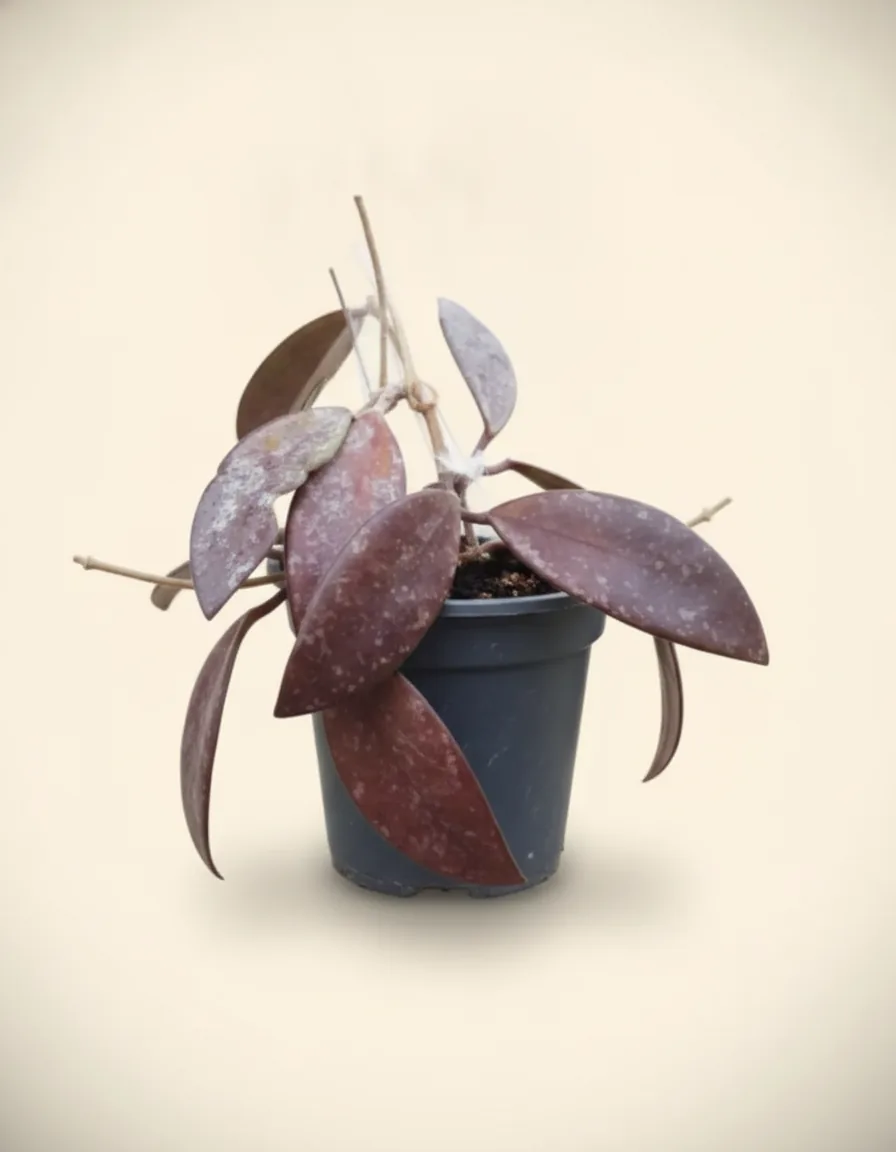
Hoya Rundumensis Red
Origin: Java & Sumatra, Indonesia
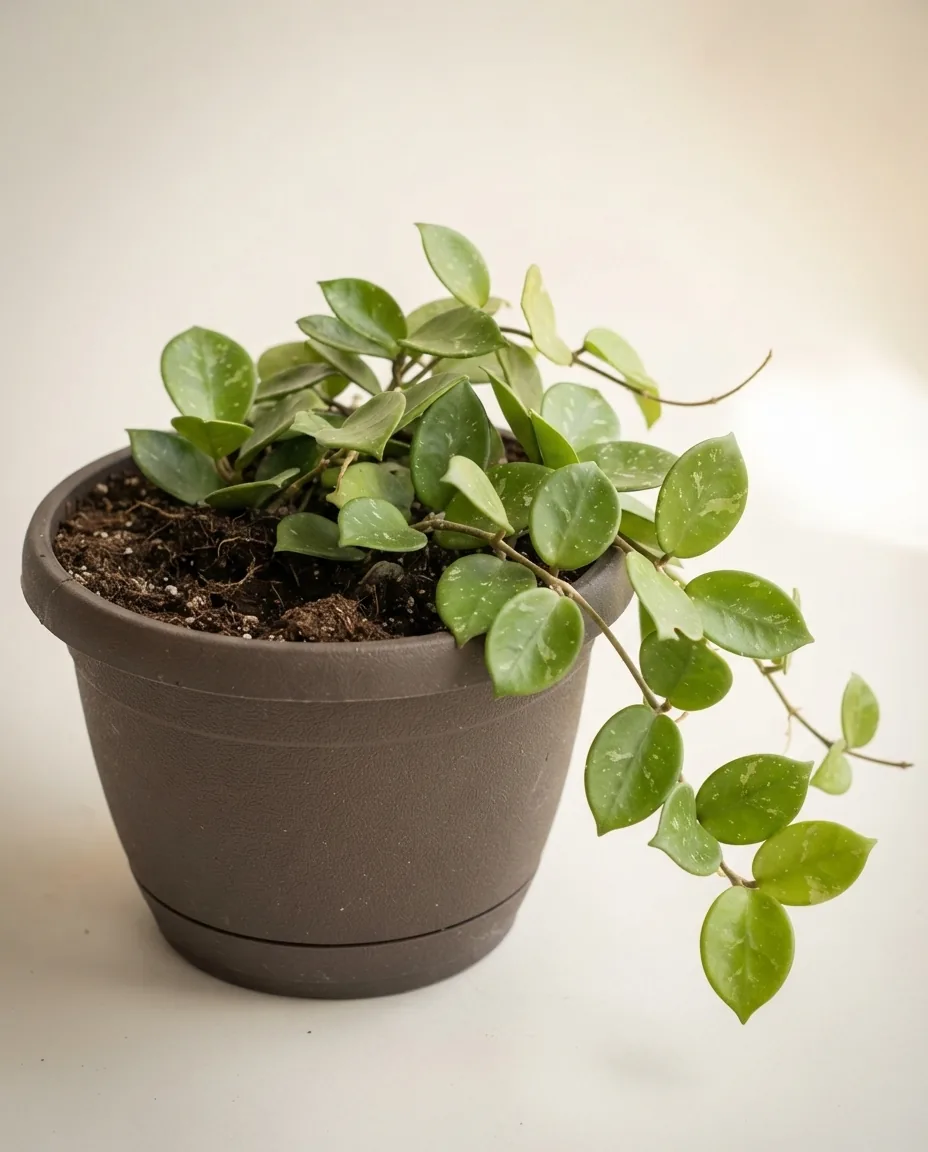
Hoya Eskimo
Origin: Java & Sumatra, Indonesia