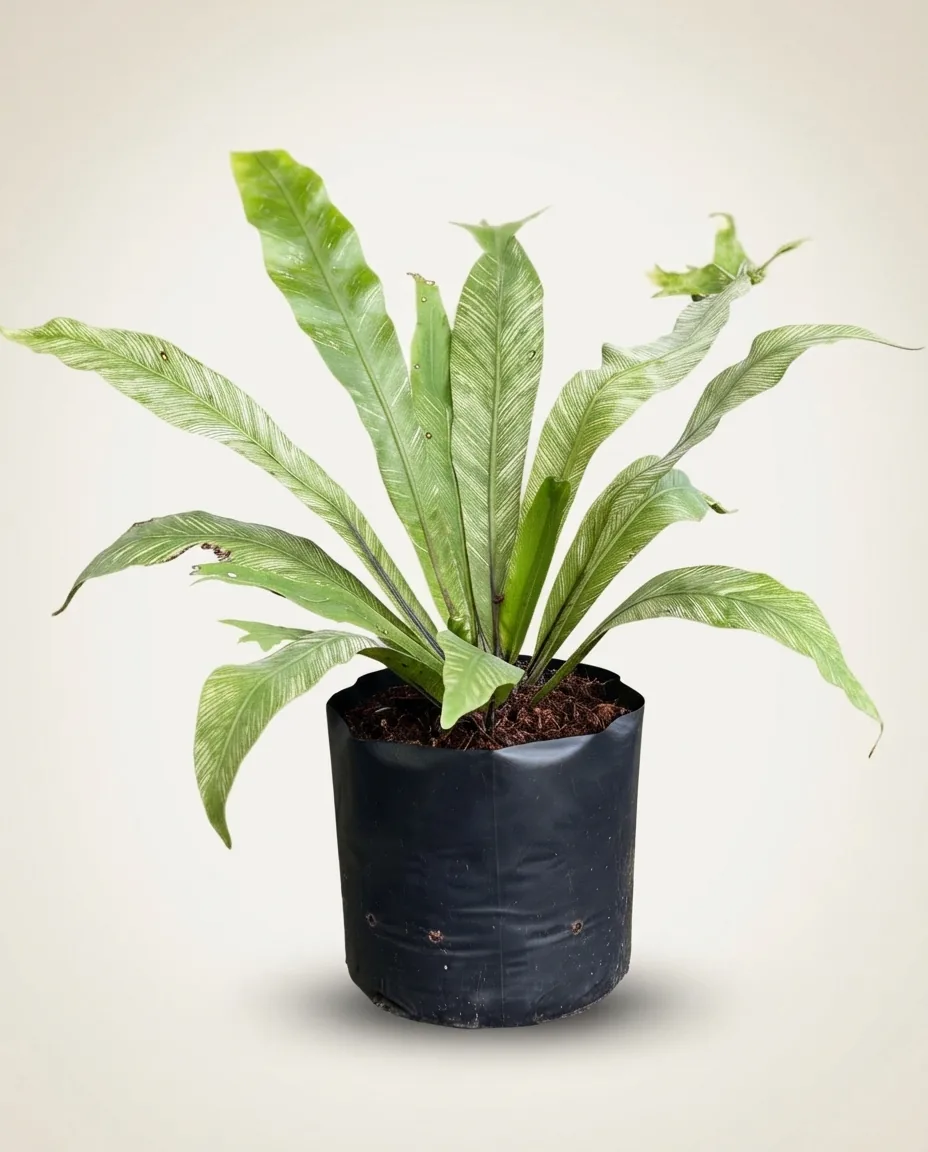
Direct Indonesian Nursery Sourcing
Acclimatized under controlled shadehouse nursery facilities in Java & Sumatra, Indonesia. Zero unverified wild-poaching.
Asplenium Nidus
Asplenium nidus
Asplenium Nidus (Asplenium nidus) is catalogued under the Aspleniaceae family in the genus Asplenium, and ships from Java & Sumatra, Indonesia at $12.85 USD per plant FOB, export grade A+. The supplier's listing records grade Medium Size. Catalogue acclimatization difficulty is rated Intermediate.
Identification, research and what to check before buying ↓Care guide for Asplenium Nidus →
Asplenium nidus L. · Aspleniaceae
The accepted name in the GBIF Backbone Taxonomy, the plant taxonomic backbone.
Protologue citation: L. (1753). In: Sp. Pl. 2: 1079.
Recorded native range: IO; TW.
A protologue is the original description of a species. It provides the naming context and diagnostic characters to compare when checking a plant’s identity. Other studies address their own research questions; their findings need to be read in that context before applying them to cultivation or the offered stock.
- On Abnormal Fronds of Asplenium nidus L. (Aspleniaceae) from Manipur, Eastern India — Nelumbo (2024)
- Asplenium nidus, a study of forest degradation bio-indicator — International Journal of Engineering, Sciences and Technologies (2024)
- Fatty Acids Composition of the Epiphytic Ferns, Platycerium bifurcatum and Asplenium nidus, and the Terrestrial Fern, Asplenium trichomanes — American Fern Journal (2021)
Taxonomy from the GBIF Backbone Taxonomy, retrieved 2026-10-22. Open the backbone record.
Rated Intermediate from the catalogue category and display name alone. Ask the supplier for the stock-specific acclimatization protocol for this consignment before ordering.
Water, feeding and foliage in the bird’s nest fern
A greenhouse experiment helps explain why feeding cannot compensate for a persistently dry root zone. A separate forest survey asks whether the fern’s appearance can indicate habitat degradation. These studies answer different questions about growing conditions and what a photograph can reveal.
Asplenium nidus · Reviewed on
Water availability changes the response to feeding
Chen and colleagues followed 56 greenhouse-grown plants for a year, combining two watering treatments with four nitrogen and phosphorus treatments. Leaf area increased under high water and declined under low water. Combined nitrogen and phosphorus had the strongest nutrient effect, but nutrient addition did not overcome the restriction imposed by low water availability. (Chen, Hogan, Wang, Wang & Lin, 2023)
For buyers: If growth slows while the medium repeatedly dries, inspect moisture management before assuming a fertiliser shortage. Ask what medium and watering conditions have sustained the offered plant so that you can plan its transition.
Scope: These were potted plants in a greenhouse. Treatment volumes and experimental fertiliser doses are not a household recipe, and the experiment did not test bare-root export recovery or crown wetness.
Forest exposure was not readable from frond size alone
Rakotonirina and colleagues surveyed flat and sloping forests in Madagascar, measuring frond length, width and number. They reported no significant differences in these traits between the compared environments, despite differing light measurements on the slopes. They also reported an association between orientation and exposure in the flat forest. (Rakotonirina Arsène Giovanni, Rasolofo Ny Aina Kenny & Fanomezanjanahary Louise Edonie, 2024)
For buyers: Ask about actual exposure and nursery conditions when comparing plants. Similar leaf dimensions can accompany different environments; a photograph alone cannot reconstruct the conditions in which the fern grew.
Scope: This was an observational habitat survey, not an indoor lighting trial. The paper gives conflicting significance values between sections, so its proposed bioindicator role needs caution and does not establish a preferred window direction.
Translate the research into a draining growing setup
RHS cultivation guidance recommends bright indirect light and compost kept moist but not soggy. It also recommends diluted liquid fertiliser during its stated UK growing season. This is horticultural guidance rather than a controlled experiment. (Royal Horticultural Society, 2026)
For buyers: Choose a container that drains and check the medium before watering. Adapt feeding to active growth in your conditions; the seasonal calendar on a UK reference page is not automatically the calendar for a tropical growing room.
Scope: The RHS page does not establish a species-specific humidity percentage, transit tolerance or recovery deadline for this Botanical Product.
Putting the research into practice
Our practical interpretation is to establish a manageable moisture routine before increasing fertiliser. Check the medium itself and whether excess water drains, then follow new fronds over time. The greenhouse findings support that order of decisions, while RHS cultivation guidance supplies the household context of bright indirect light and moist, unsaturated compost. For a purchase, compare current spread, leaf count and crown condition with the space and growing setup you can provide. The forest survey gives a further reason to request the supplier’s growing history: measured frond traits did not reliably separate the environments sampled. A healthy-looking photograph therefore needs accompanying information about rooting, recent conditions and dispatch format.
Supplier-reported facts
- Catalogue item
- Asplenium Nidus
- Supplier form / grade
- Medium Size
Still to confirm with the supplier
- The reviewed supplier record says Medium Size, 3–4 Leaves. Confirm current leaf count, measured spread, crown condition and rooting with photographs of the actual plant.
- Ask about the current growing medium and recent light and watering conditions, then confirm bare-root preparation, packing and proposed route with the export desk.
References
- Responses of a common tropical epiphyte, Asplenium nidus, to changes in water and nutrient availability
Chen, Hogan, Wang, Wang & Lin (2023). AoB PLANTS.
Reviewed from: Full text
- Asplenium nidus, a study of forest degradation bio-indicator
Rakotonirina Arsène Giovanni, Rasolofo Ny Aina Kenny & Fanomezanjanahary Louise Edonie (2024). International Journal of Engineering, Sciences and Technologies.
Reviewed from: Full text
- Asplenium nidus — horticultural cultivation guidance
Royal Horticultural Society (2026). RHS Plant Profile (undated; reviewed 2026).
Reviewed from: Full text
“Full text” records the version our editors read. It does not mean the publisher offers free public access; some articles require a subscription.How we review and explain sources.
Botanical and ethnobotanical information on this page is provided for horticultural reference only. It is not medical advice and is not a substitute for professional medical guidance.
International Trade Compliance & Regulatory Guidance
Catalog regulatory tags represent informational screening indicators only and do not constitute an advance permit, clearance, or government certification. Import requirements vary by taxon, consignment volume, and destination authority; buyers should confirm requirements with their destination plant health agency or our export desk prior to order.
USDA APHIS Guidance (7 CFR 319.37)
Screening reflects general admissibility guidelines under USDA APHIS regulations. Actual entry requirements depend on current taxon manuals, port routing (such as PIS Miami, JFK, LAX), and permit category (PPQ 587). Buyer must verify applicable permit and labeling requirements with USDA APHIS or our export desk before ordering.
Indonesian Agricultural Quarantine (Barantan)
Consignments must be submitted for PPK (Pemeriksaan Karantina Tumbuhan) inspection by Badan Karantina Indonesia prior to export dispatch. Phytosanitary certificates are issued only upon successful official examination; catalog tags are screening indicators and do not constitute an advance certificate guarantee.
EU TRACES-NT & CHED-PP (Reg 2016/2031)
European Union plant health directives require CHED-PP pre-notification in TRACES-NT and arrival through designated Border Control Posts (such as AMS or FRA). Importers should confirm current high-risk lists, quarantine status, and member state rules before ordering.
Nursery grade source: Supplier classification at the nursery. The Medium Size grade is the supplier's record for this SKU, quoted as published.
Export Packaging & Root Preservation Standard
Growing guidance & dispatch checks
Royal Horticultural Society — Asplenium nidus — Supports rosette form, bright indirect light, moist but well-drained compost and propagation guidance. It does not establish export performance.
Clemson Cooperative Extension — Bird’s nest fern care — Supports watering around the pot edge, avoiding water in the centre and keeping the medium from becoming waterlogged.
University of Hawaiʻi — Asplenium nidus propagation — Supports rosette morphology and propagation by spores or tissue culture. It reports no division information.
Source-backed care guidance; retain the source limits below. Nursery conditions must be confirmed for the offered stock and are not measured care tolerances. Inspect roots and foliage on arrival, document concerns, and ask the export desk for stock-specific watering and acclimatization advice.
Related Species in Ferns & Platycerium
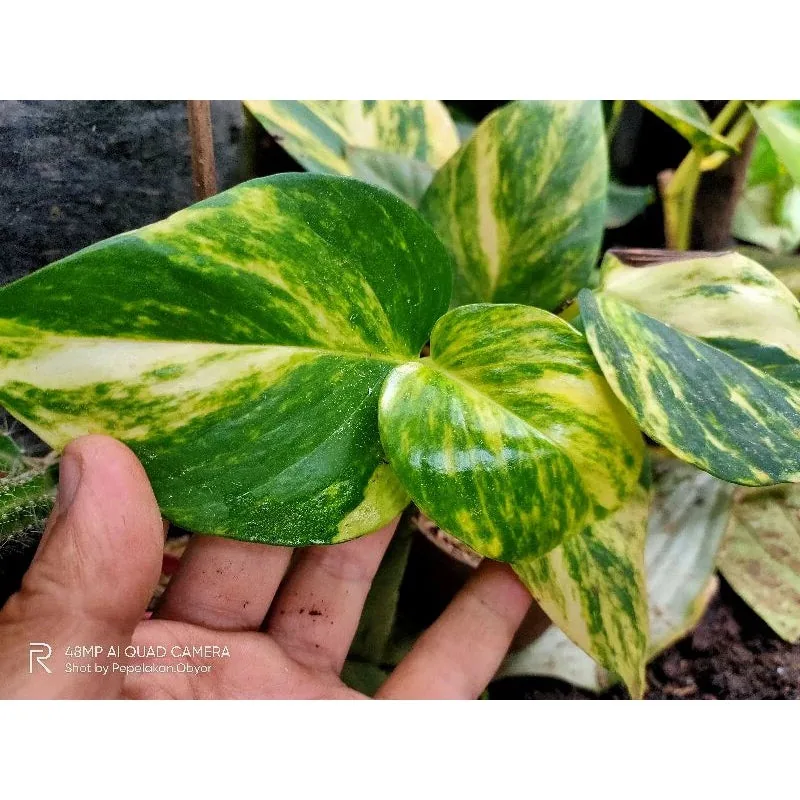
Asplenium Nidus Yellow Variegated
Origin: Java & Sumatra, Indonesia
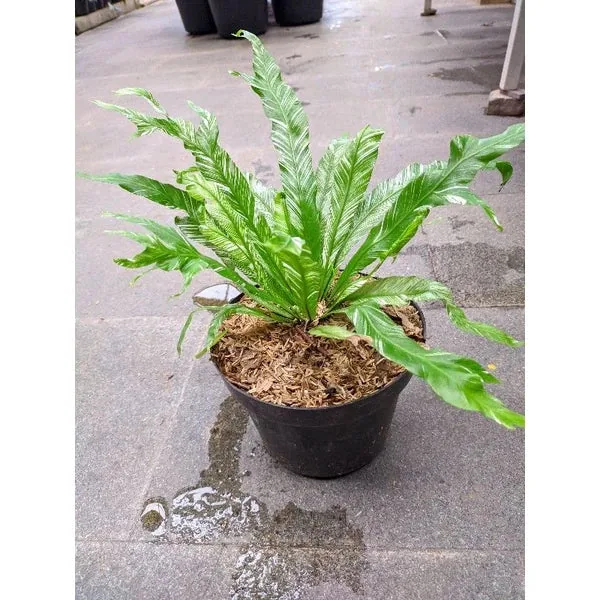
Asplenium Nidus White Variegated
Origin: Java & Sumatra, Indonesia
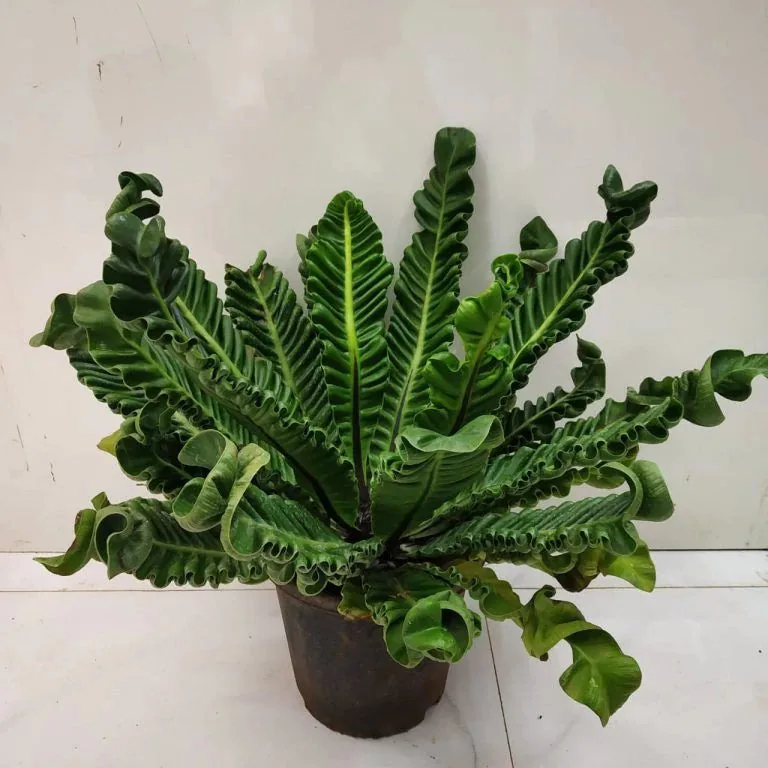
Asplenium Lasagna
Origin: Java & Sumatra, Indonesia
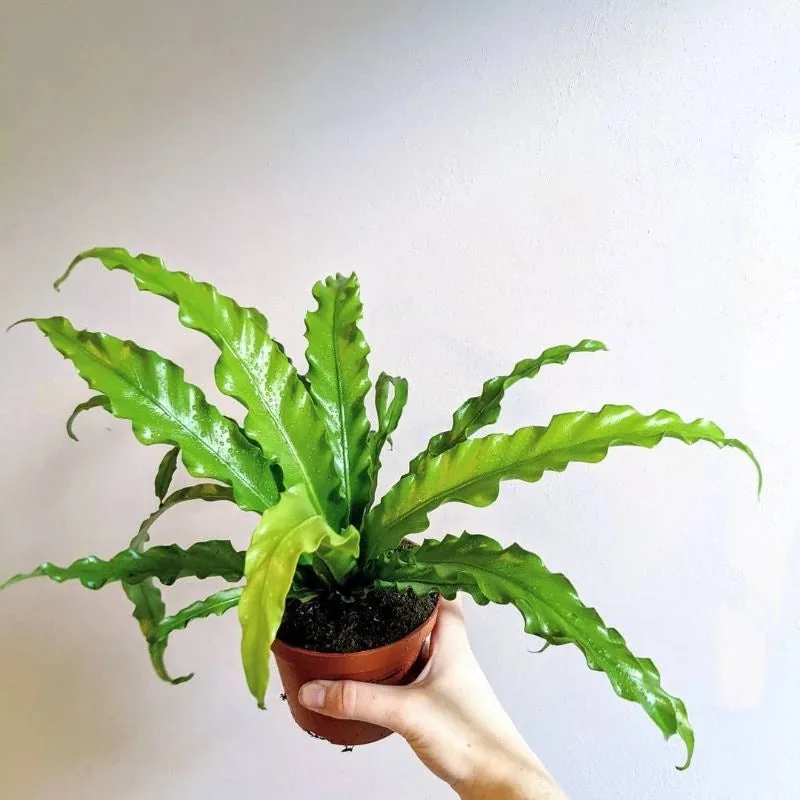
Asplenium Osaka
Origin: Java & Sumatra, Indonesia
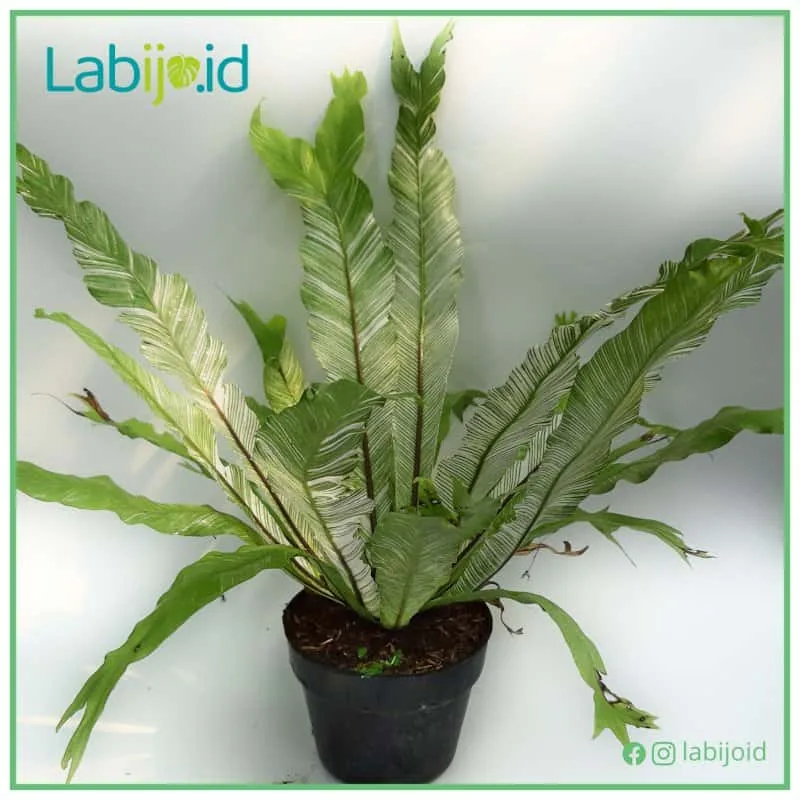
Asplenium Variegated
Origin: Java & Sumatra, Indonesia
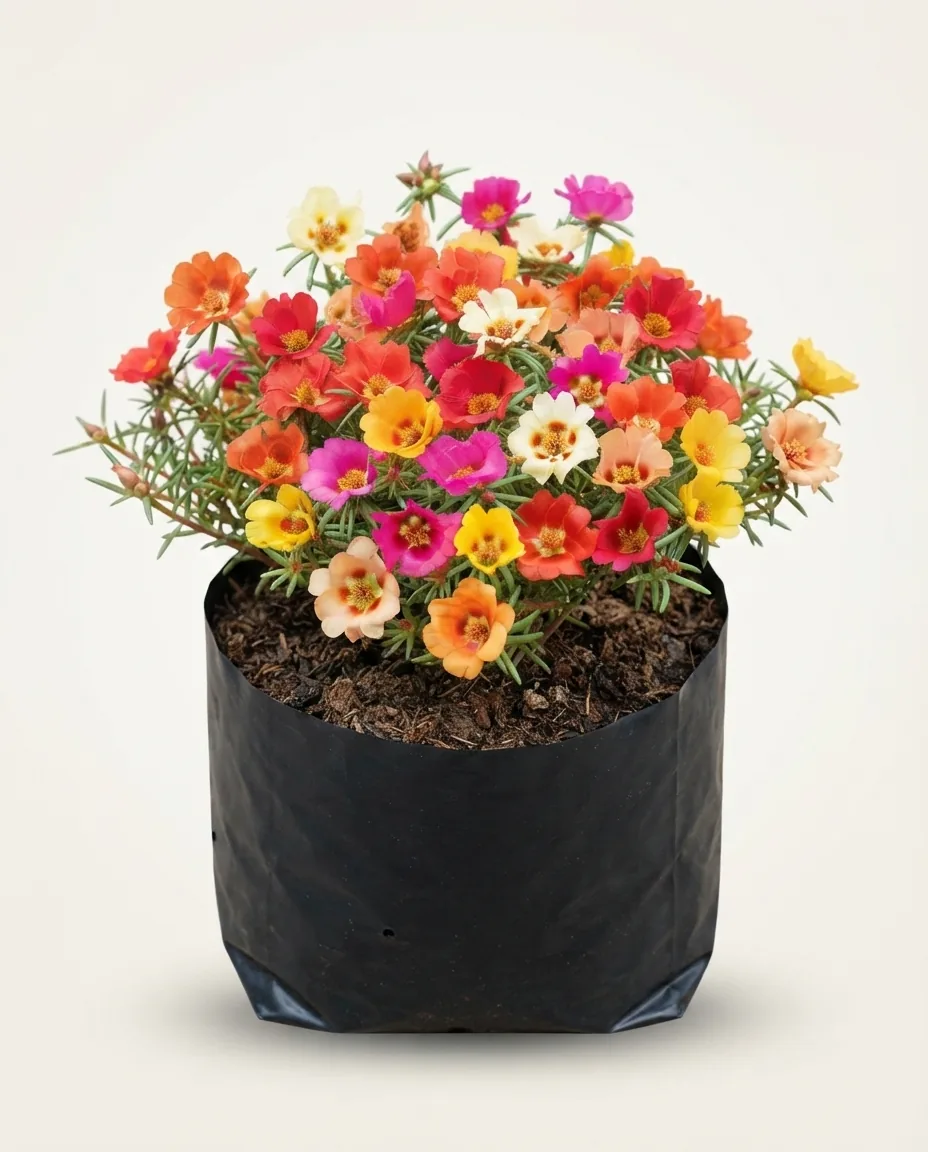
Rosa Grandiflora Moss Roses
Origin: Java & Sumatra, Indonesia