Asplenium nidus Care Guide
Asplenium Nidus — Aspleniaceae family, exported from our East Java desk and shipped bare-root. Light, water, humidity, substrate, temperature, propagation and the dispatch details to confirm before transit, in one place.
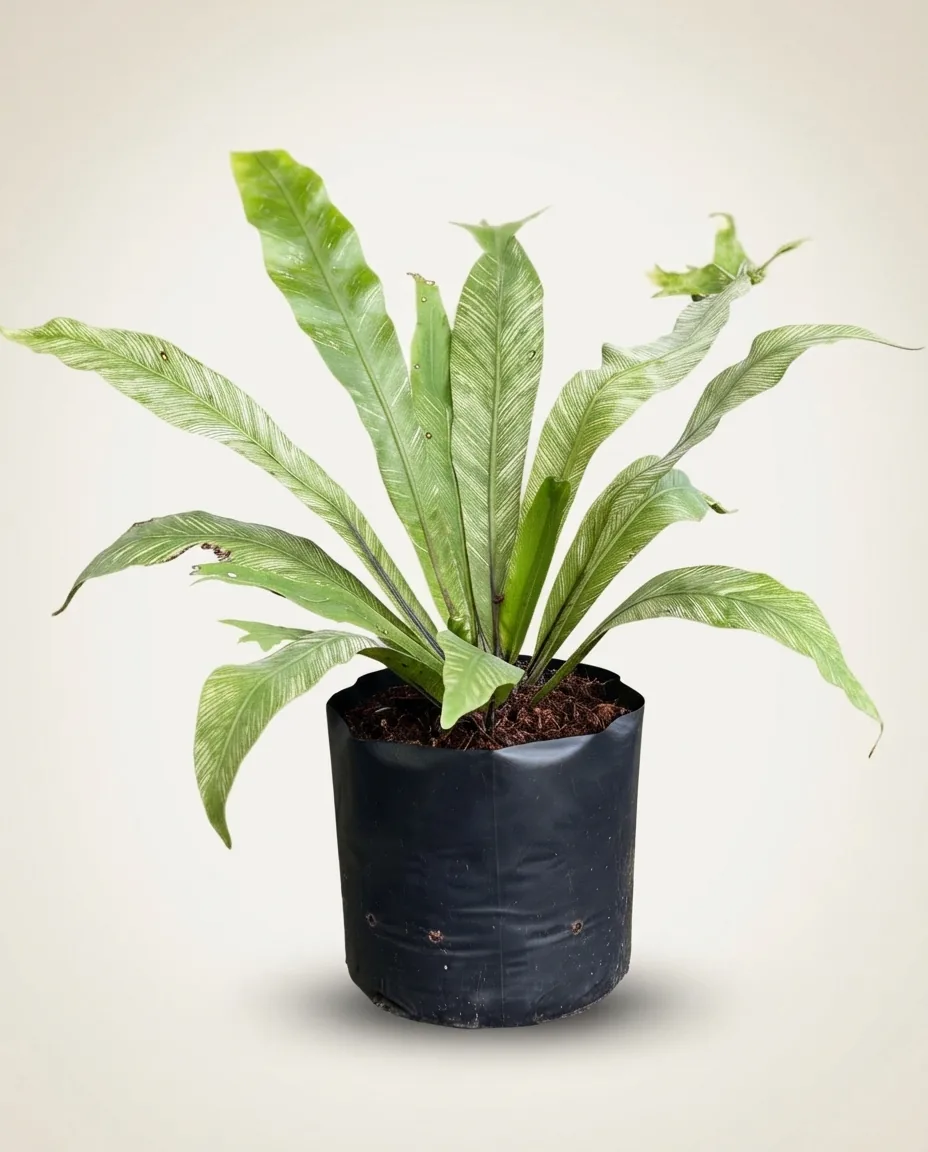
What to know first
Asplenium nidus is an evergreen rosette fern for bright indirect light and a moist, well-drained medium. Protect the central growing point from persistent wetness, and confirm the actual leaf count, spread and rooting condition of export stock before ordering.
- RHS guidance supports bright indirect light and moist but not soggy compost.
- University guidance recommends watering around the pot edge rather than into the central rosette.
- The supplier listing says Medium Size, 3–4 Leaves; it does not provide measured spread or rooting status.
Bird’s nest fern forms a rosette of strap-shaped fronds around a central growing point. New fronds emerge from the centre. Its rosette form is a useful identification feature, while suitability for a particular room depends on light, moisture and temperature.
Growing Asplenium nidus
- LightBright filtered light; it scorches in direct sunRHS recommends bright indirect light. Protect the fronds from strong direct sun, and assess the actual exposure rather than relying on a window direction or a fixed distance from glass.
- WaterKeep the mix evenly moist, never saturatedKeep the growing medium moist but well drained. Water around the container edge, let excess drain and avoid leaving the pot standing in water. Persistent wetness in the central rosette can contribute to rot; a damaged crown needs assessment rather than a diagnosis from colour alone.
- HumidityModerate humidity without waterlogged compostRHS recommends moderate humidity for indoor epiphytic ferns. The sources do not establish a species-specific percentage, so keep the plant away from drying heat and judge adjustments from new growth while keeping the compost moist but not soggy.
- SubstrateMoist, well-drained medium with the growing point above itUse a moisture-retentive, freely draining medium and keep the central growing point above it. The cited sources support drainage and crown protection, rather than one required mix recipe.
- TemperatureWarm indoor conditions; protect from coldRHS classifies the species as tender and gives an under-glass minimum above 15 °C. That is a general cultivation threshold, not evidence for a precise optimum or a claim about year-round growth rate.
- PropagationSpores or tissue culture; division guidance varies by sourceUniversity of Hawaiʻi and UF/IFAS sources document spores and tissue culture. RHS also lists division, but the cited sources do not establish when a particular exported plant can be divided. Do not cut the central rosette on the assumption that every specimen has separable crowns.
Sources and growing guidance
- Royal Horticultural Society — Asplenium nidus
Supports rosette form, bright indirect light, moist but well-drained compost and propagation guidance. It does not establish export performance.
- Clemson Cooperative Extension — Bird’s nest fern care
Supports watering around the pot edge, avoiding water in the centre and keeping the medium from becoming waterlogged.
- University of Hawaiʻi — Asplenium nidus propagation
Supports rosette morphology and propagation by spores or tissue culture. It reports no division information.
New fronds emerge from the centre of the rosette while older outer fronds age. Keep the growing point above the medium and avoid leaving water in the centre. A stalled or damaged centre can have more than one cause, so inspect moisture, temperature, pests and root condition rather than treating one symptom as a diagnosis.
Bare-root export and transit
The cited horticultural sources do not test bare-root export duration, frond breakage rates or post-shipping recovery. Confirm current leaf count, measured spread, crown condition, root condition, packing method, proposed route and a current photograph before dispatch.
How every consignment is prepared
- Root preparation100% Bare-root washed (zero soil, zero unsterilized peat).
- TreatmentSystemic broad-spectrum anti-fungal & bactericide dip treatment.
- Root wrapSterile Chilean AAA damp sphagnum moss protective root-envelope.
- Dispatch conditions to confirmConfirm leaf count, measured spread, crown condition, roots, packing method, proposed route and a current photograph. The cited sources do not establish a species-specific transit window or breakage rate.
Questions buyers ask
Where should I water a bird’s nest fern?
Water the growing medium around the outer edge of the container and let excess drain. Clemson Extension advises keeping water out of the centre of the rosette because persistent crown wetness can lead to rot.
What should I check before potting an arriving fern?
Check whether it arrives bare-root or in a permitted growing medium, inspect the roots and crown, and use a container that drains freely. Keep the central growing point above the mix. The cited sources do not establish a fixed waiting period after international shipping.
How do I keep the crown from rotting?
Water the mix around the edge rather than down the middle, and empty the saucer after every watering. Keep the central growing point above the substrate and avoid persistent crown wetness. These steps reduce a recognised risk; they do not rule out other causes of damage.
What the published literature calls this plant
A protologue is the original published description of a species. It helps you compare diagnostic characters — the features used to distinguish that species from similar plants. Compare those characters with photographs of the offered plant and its documented mother plant where available. A species description provides identification evidence; cultivation advice also needs evidence about growing conditions, as explained in the guidance above.
Asplenium nidus L. · Aspleniaceae
The accepted name in the GBIF Backbone Taxonomy, the plant taxonomic backbone.
Protologue citation: L. (1753). In: Sp. Pl. 2: 1079.
Recorded native range: IO; TW.
- On Abnormal Fronds of Asplenium nidus L. (Aspleniaceae) from Manipur, Eastern India — Nelumbo (2024)
- Asplenium nidus, a study of forest degradation bio-indicator — International Journal of Engineering, Sciences and Technologies (2024)
- Fatty Acids Composition of the Epiphytic Ferns, Platycerium bifurcatum and Asplenium nidus, and the Terrestrial Fern, Asplenium trichomanes — American Fern Journal (2021)
Taxonomy from the GBIF Backbone Taxonomy. Open the backbone record.
Order Asplenium Nidus
The supplier record lists Medium Size, 3–4 Leaves and A+ grade, but not measured spread or rooting status. Confirm the current plant and dispatch format. The minimum export order is 20 plants, volume discounts start at 30 plants, and freight is quoted per volumetric box.
The commercial pages behind this guide
- How to import plants from IndonesiaThe full document-to-door sequence: bare-root preparation, Barantan certification, destination permits, inspection and arrival.
- Estimated shipping ratesFreight basis and indicative transit for a consignment, with the variables that move the price.
- Wholesale termsMinimum order, volume tiers, deposit, the document set, and the split of responsibility between exporter and importer.
- Live arrival guaranteeWhat the guarantee covers and how to report condition within the arrival window.