Platycerium ridleyi Care Guide
Platycerium Ridleyi — Polypodiaceae family, exported from our East Java desk and shipped bare-root. Light, water, humidity, substrate, temperature, propagation and the dispatch details to confirm before transit, in one place.
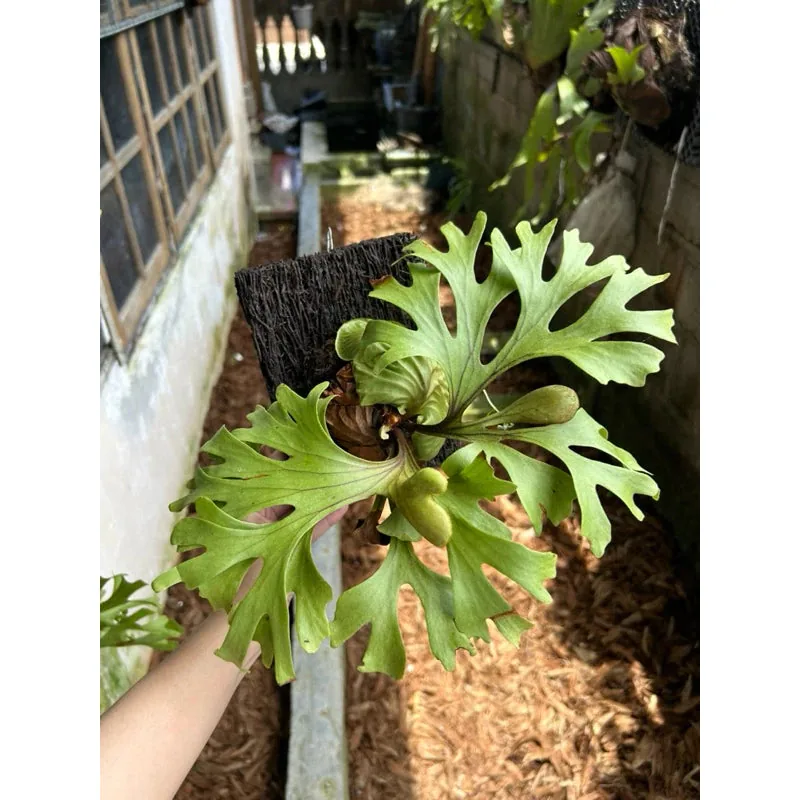
What to know first
Platycerium ridleyi is a solitary epiphytic fern recognized by strongly ribbed green shield fronds and upright fertile fronds with separate spore-bearing lobes. It does not normally produce pups, so ask whether the offered plant is spore-grown or tissue-cultured and confirm its root and shield condition.
- Normal mature shield fronds are strongly ribbed and usually green; old or damaged tissue may brown.
- Documented propagation routes are spores and tissue culture, not routine offset division.
- Confirm dimensions, intact shield condition, rooting, mounted or unmounted dispatch and a current photo.
Platycerium ridleyi is recognized by a solitary crown, strongly ribbed shields enclosing the roots, and stiff upright fertile fronds with separate oval or elliptical spore-bearing lobes. Mature shields are usually green, although old or damaged tissue can brown. That combination separates it from colony-forming Platycerium with long hanging fertile fronds.
Growing Platycerium ridleyi
- LightBright filtered light with moving humid airUse bright filtered light with moving humid air. Do not diagnose normal maturity from colour alone: the species registry describes mature shields as usually green, while old or damaged tissue can brown. Check texture, new growth and the whole plant before changing conditions.
- WaterLet the mix dry slightly between waterings; mount plants dry out faster than potted onesCheck moisture in the root chamber and water the growing medium thoroughly when needed, allowing excess to drain. Mount size, medium and airflow affect drying, so a mounted plant and a container-grown plant may need different intervals.
- HumidityHumid moving air; no verified household percentageThe species registry recommends humid moving air but does not establish a numerical household target. Monitor the root chamber and new growth, avoid abrupt drying, and avoid stagnant wet conditions around the shield.
- SubstrateSupport the epiphytic root chamber with an airy mount or equivalent setupWild plants grow on trees and overlapping shields enclose the roots. A mount is the clearest way to reproduce that orientation, but the cited sources do not prove that every container setup fails. Keep the root zone airy and avoid burying the shield tissue in dense wet media.
- TemperatureKeep conditions warm and steadyThe species registry warns that Platycerium ridleyi is sensitive to both winter cold and summer heat. It does not provide a tested optimum range, so avoid rapid extremes and keep a wet mount away from cold glass.
- PropagationSpores or documented tissue culture; normal offsets are not expectedThe species is solitary and does not normally produce pups for division. Research documents spore culture and clonal in-vitro regeneration. Those laboratory methods do not establish a household rooting timeline or justify separating a plant that lacks an independent crown.
Sources and growing guidance
- World Platycerium Society — Platycerium ridleyi registry
Synthesizes documented morphology, solitary growth and propagation evidence with linked references. It does not establish export survival or a household recovery schedule.
- Spore Morphology of Platycerium and Its Implications
Supports the diagnostic value of Platycerium ridleyi spore ornamentation. It is a taxonomic study, not a care or transit trial.
The species is solitary rather than colony-forming. Its strongly ribbed shields enclose the root chamber, while stiff fertile fronds grow upward and carry separate oval or elliptical spore-bearing lobes. Brown spore-bearing tissue on a mature fertile lobe is not the same as a damaged shield.
Bare-root export and transit
The cited records do not test bare-root transit duration or arrival condition. Confirm whether the offered plant is spore-grown or tissue-cultured, its measured dimensions, root condition, intact shield, mounted or unmounted dispatch, packing method, proposed route and a current photograph.
How every consignment is prepared
- Root preparation100% Bare-root washed (zero soil, zero unsterilized peat).
- TreatmentSystemic broad-spectrum anti-fungal & bactericide dip treatment.
- Root wrapSterile Chilean AAA damp sphagnum moss protective root-envelope.
- Dispatch conditions to confirmConfirm propagation method, dimensions, root and shield condition, dispatch format, packing, route and a current photograph. The cited sources do not establish a species-specific transit window or arrival condition.
Questions buyers ask
Does Platycerium ridleyi normally produce pups?
No normal colony of offsets is expected. The species is documented as solitary, with propagation through spores and tissue culture. Ask the supplier how the offered plant was propagated rather than assuming it is a detachable pup.
How do I water a mounted elkhorn fern?
Check the medium behind the shield, water thoroughly when needed and let excess drain. Adjust the interval to the medium, mount and airflow. The cited registry supports humid moving air but does not establish one watering schedule for every setup.
What is the difference between the two frond types?
Strongly ribbed shield fronds enclose the roots and are usually green when mature. Upright fertile fronds carry separate spore-bearing lobes. Brown spore-bearing tissue on a fertile lobe should be distinguished from damage to a shield.
What the published literature calls this plant
A protologue is the original published description of a species. It helps you compare diagnostic characters — the features used to distinguish that species from similar plants. Compare those characters with photographs of the offered plant and its documented mother plant where available. A species description provides identification evidence; cultivation advice also needs evidence about growing conditions, as explained in the guidance above.
Platycerium ridleyi Christ · Polypodiaceae
The accepted name in the GBIF Backbone Taxonomy, the plant taxonomic backbone.
Protologue citation: Christ. (1909). In: Ann. Jard. Bot. Buitenz. II, Suppl. 3: 8, T. 2.
- In Vitro Regeneration of Platycerium ridleyi Christ. Sporophytes via Homogenized Green Globular Bodies — New Zealand Journal of Crop and Horticultural Science (2026)
- A New Record of the Fern Platycerium Ridleyi Christ — The Sarawak Museum Journal (2004)
- The First Record of Platycerium ridleyi in Sumatera — American Fern Journal (1982)
Taxonomy from the GBIF Backbone Taxonomy. Open the backbone record.
Order Platycerium Ridleyi
The supplier record labels this line A+ but does not state dimensions, rooting or propagation method. Confirm those details, shield condition and dispatch format. The minimum export order is 20 plants, volume discounts start at 30 plants, and freight is quoted per volumetric box.
The commercial pages behind this guide
- How to import plants from IndonesiaThe full document-to-door sequence: bare-root preparation, Barantan certification, destination permits, inspection and arrival.
- Estimated shipping ratesFreight basis and indicative transit for a consignment, with the variables that move the price.
- Wholesale termsMinimum order, volume tiers, deposit, the document set, and the split of responsibility between exporter and importer.
- Live arrival guaranteeWhat the guarantee covers and how to report condition within the arrival window.