Ficus villosa Care Guide
Ficus Villosa — Moraceae family, exported from our East Java desk and shipped bare-root. Light, water, humidity, substrate, temperature, propagation and the dispatch details to confirm before transit, in one place.
What to know first
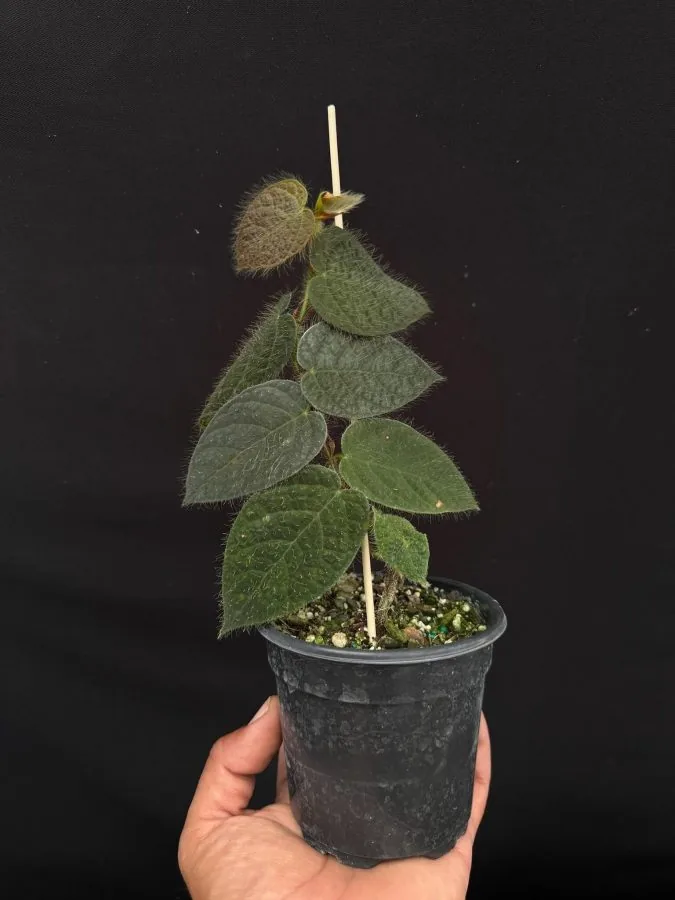
Ficus villosa is a root-climbing fig with hairy young growth, not a conventional upright fruit-tree seedling. This guide covers identification and cautious establishment after bare-root dispatch; current size, rooting and condition must be confirmed on the product page or with the export desk.
- NParks describes young plants creeping over trunks or the ground and mature plants producing flexible, vine-like stems.
- The published botanical description supports hairy growth, leathery leaves and white latex, but does not establish an indoor humidity target or a post-shipping recovery schedule.
- Ask for a current photo, measured stem length, root condition and dispatch format before ordering.
NParks describes Ficus villosa as a latex-containing root climber covered with soft hairs on its vegetative parts. Young plants may creep over trunks or the ground; mature plants can extend flexible vine-like stems across surrounding vegetation. Mature leaves are leathery and elliptical to ovate, while young leaves are softer and conspicuously hairy.
Growing Ficus villosa
- LightBright filtered lightUse filtered light as a cautious starting point and introduce changes gradually. NParks describes its climbing forest habit, but the cited sources do not establish an indoor light threshold, grow-light duration or safe amount of direct sun.
- WaterSteady moisture, never waterloggedCheck the root zone before watering and allow excess water to drain. Steady moisture without prolonged saturation is a cautious establishment approach; the cited botanical records do not test a species-specific watering interval or diagnose leaf loss.
- HumidityAvoid abrupt drying while newly establishedThe botanical sources identify a wet-tropical climbing fig but do not test a household humidity percentage. Keep conditions steady while roots establish and avoid sealing wet foliage in still air; adjust from the plant response rather than treating an unsupported number as a species requirement.
- SubstrateAn airy medium suited to the actual root conditionChoose a freely draining medium and assess how quickly it dries in your conditions. The cited sources do not compare mixes or establish a bark, coir and perlite recipe. Confirm the dispatched root condition before choosing a container and medium.
- TemperatureWarm, steady conditions; no verified indoor temperature rangeIts tropical distribution supports caution around cold exposure, but does not establish a tested indoor minimum or maximum. Keep establishment conditions steady and discuss seasonal temperatures along the proposed shipping route with the export desk.
- PropagationPropagation method is not established by the cited species sourceNParks records white latex and a root-climbing habit, but it does not provide a tested propagation protocol for Ficus villosa. Ask how the offered stock was propagated and whether the dispatched plant is already rooted instead of assuming a cutting method or rooting time.
Sources and growing guidance
- Singapore National Parks Board — Ficus villosa
Supports the root-climbing habit, hairy vegetative parts, leaf form, latex and native range. It does not establish indoor humidity targets, transit duration or recovery time.
- Plants of the World Online — Ficus villosa
Supports the accepted name and taxonomic record. It does not authenticate the current offered specimen or its condition.
Plan space and support for a root climber rather than assuming an upright tree form. Before choosing support, ask for a current whole-plant photograph and measurements of the offered specimen. The supplier category alone does not describe its growth habit.
Bare-root export and transit
The cited botanical record does not test bare-root transit duration or recovery. Before dispatch, confirm the actual root condition, stem length, number of leaves, packing method, proposed route and a current photograph. After arrival, follow the applicable inspection requirements and change conditions gradually while observing the plant.
How every consignment is prepared
- Root preparation100% Bare-root washed (zero soil, zero unsterilized peat).
- TreatmentSystemic broad-spectrum anti-fungal & bactericide dip treatment.
- Root wrapSterile Chilean AAA damp sphagnum moss protective root-envelope.
- Dispatch conditions to confirmConfirm the root condition, measured stem length, packing method, proposed route and current photograph with the export desk. The cited sources do not establish a species-specific transit window or recovery time.
Questions buyers ask
What growth habit should Ficus villosa have?
It is a root-climbing fig. NParks records young plants creeping over trunks or the ground and mature plants extending flexible vine-like stems. Hairy young growth, leathery mature leaves and white latex are useful supporting characters.
Does Ficus villosa require a fixed humidity percentage?
The cited botanical source establishes a wet-tropical habitat but does not test a household humidity target. Avoid abrupt drying during establishment and avoid sealing wet foliage in still air; use the plant response rather than an unsupported percentage.
What should I confirm before ordering Ficus villosa?
Ask for the measured stem length, root condition, number of leaves, current photograph, packing method and proposed route. The available source does not establish a species-specific transit window, survival rate or recovery time.
What the published literature calls this plant
A protologue is the original published description of a species. It helps you compare diagnostic characters — the features used to distinguish that species from similar plants. Compare those characters with photographs of the offered plant and its documented mother plant where available. A species description provides identification evidence; cultivation advice also needs evidence about growing conditions, as explained in the guidance above.
Ficus villosa Blume · Moraceae
The accepted name in the GBIF Backbone Taxonomy, the plant taxonomic backbone.
Protologue citation: Blume. (1823). In: Bijdr. 441.
- ANTIMICROBIAL POTENTIAL OF EXTRACT DERIVED FROM THE LEAVES OF FICUS VILLOSA BLUME AGAINST SOME FISH PATHOGENIC STRAINS — The Scientific and Technical Bulletin of the Institute of Animal Science NAAS of Ukraine (2023)
Taxonomy from the GBIF Backbone Taxonomy. Open the backbone record.
Order Ficus Villosa
The supplier record labels this line A+ but does not provide measured dimensions or rooting status. Confirm the current specimen and dispatch format with the export desk. The minimum export order is 20 plants, volume discounts start at 30, and freight is quoted per volumetric box.
The commercial pages behind this guide
- How to import plants from IndonesiaThe full document-to-door sequence: bare-root preparation, Barantan certification, destination permits, inspection and arrival.
- Estimated shipping ratesFreight basis and indicative transit for a consignment, with the variables that move the price.
- Wholesale termsMinimum order, volume tiers, deposit, the document set, and the split of responsibility between exporter and importer.
- Live arrival guaranteeWhat the guarantee covers and how to report condition within the arrival window.