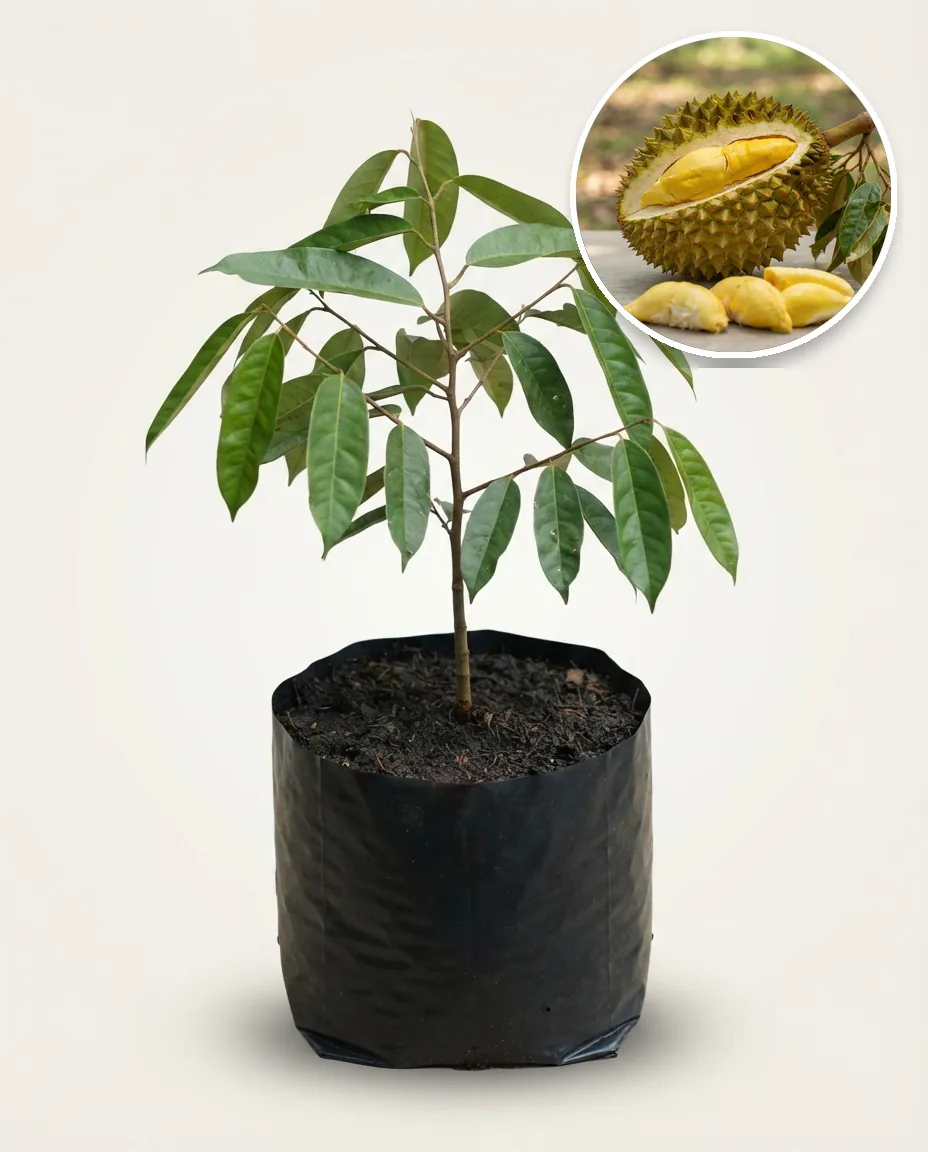
Direct Indonesian Nursery Sourcing
Acclimatized under controlled shadehouse nursery facilities in Java & Sumatra, Indonesia. Zero unverified wild-poaching.
Durian Monthong Thailand
Durio zibethinus
Durian Monthong Thailand (Durio zibethinus) is catalogued under the Malvaceae family in the genus Durio, and ships from Java & Sumatra, Indonesia at $38.50 USD per plant FOB, export grade A+. The supplier's listing records dispatch size 80–100 cm and grafted stock. Catalogue acclimatization difficulty is rated Intermediate.
Identification, research and what to check before buying ↓Durio zibethinus Murray · Malvaceae
The accepted name in the GBIF Backbone Taxonomy, the plant taxonomic backbone.
Protologue citation: Murray. (1774). In: Syst. Veg. (Ed. 13) 581.
A protologue is the original description of a species. It provides the naming context and diagnostic characters to compare when checking a plant’s identity. Other studies address their own research questions; their findings need to be read in that context before applying them to cultivation or the offered stock.
- Uji Mutu Pelet Kayu Durian (Durio zibethinus) dengan Perekat Tepung Tapioka — JURNAL HUTAN TROPIKA (2026)
- Evaluation of a Serum Formulation Containing Durian (Durio zibethinus Murray) Peel Extract Against Propionibacterium acnes — Jurnal Kesehatan Yamasi Makassar (2026)
- GIBBERELLIN (GA3) CONCENTRATION AND SOAKING DURATION EFFECTS ON DURIAN SEED GROWTH (Durio zibethinus Murr.) — ROCE : Jurnal Pertanian Terapan (2025)
Taxonomy from the GBIF Backbone Taxonomy, retrieved 2026-10-22. Open the backbone record.
Rated Intermediate from the catalogue category and display name alone. Ask the supplier for the stock-specific acclimatization protocol for this consignment before ordering.
Graft compatibility and clonal characteristics of Monthong Durian
Durio zibethinus cv. Monthong ("Golden Pillow") is the most commercially celebrated Thai durian cultivar. Horticultural propagation research records vegetative grafting techniques, scion compatibility, and juvenile clonal vigor.
Durio zibethinus cv. Monthong · Reviewed on
Graft union healing and vascular continuity
Horticultural studies demonstrate that successful Durio cleft grafts establish cambial alignment and xylem connectivity within 6–8 weeks under tropical shade. (Nanthachai, S., 1994)
For buyers: Inspect the graft union on the lower stem. The union should be callused and firm. Do not remove stabilizing parafilm until the scion produces active terminal growth.
Scope: Laboratory histological evaluations do not predict stress responses to intercontinental bare-root transit.
Putting the research into practice
Commercial Monthong plants are produced via approach grafting, cleft grafting, or patch budding onto vigorous seedling rootstocks. Evaluating a grafted Monthong consignment requires verifying an established, lignified graft union without fungal decay at the wrap site.
Supplier-reported facts
- Catalogue item
- Durian Monthong Thailand
- Recorded dispatch size
- 80–100 cm
- Recorded plant attributes
- grafted
Still to confirm with the supplier
- Check that the graft union is fully callused without weeping sap or fungal mycelium.
- Ensure the scion leaves are intact with healthy apical buds.
- Acclimatize in high humidity (80%+) before transitioning to full tropical sun.
References
- Vegetative propagation and scion-rootstock interaction in Durio zibethinus
Nanthachai, S. (1994). Durio: Technology and Development, Department of Agriculture Thailand.
Reviewed from: Abstract only
“Full text” records the version our editors read. It does not mean the publisher offers free public access; some articles require a subscription.How we review and explain sources.
Botanical and ethnobotanical information on this page is provided for horticultural reference only. It is not medical advice and is not a substitute for professional medical guidance.
International Trade Compliance & Regulatory Guidance
Catalog regulatory tags represent informational screening indicators only and do not constitute an advance permit, clearance, or government certification. Import requirements vary by taxon, consignment volume, and destination authority; buyers should confirm requirements with their destination plant health agency or our export desk prior to order.
USDA APHIS Guidance (7 CFR 319.37)
Screening reflects general admissibility guidelines under USDA APHIS regulations. Actual entry requirements depend on current taxon manuals, port routing (such as PIS Miami, JFK, LAX), and permit category (PPQ 587). Buyer must verify applicable permit and labeling requirements with USDA APHIS or our export desk before ordering.
Indonesian Agricultural Quarantine (Barantan)
Consignments must be submitted for PPK (Pemeriksaan Karantina Tumbuhan) inspection by Badan Karantina Indonesia prior to export dispatch. Phytosanitary certificates are issued only upon successful official examination; catalog tags are screening indicators and do not constitute an advance certificate guarantee.
EU TRACES-NT & CHED-PP (Reg 2016/2031)
European Union plant health directives require CHED-PP pre-notification in TRACES-NT and arrival through designated Border Control Posts (such as AMS or FRA). Importers should confirm current high-risk lists, quarantine status, and member state rules before ordering.
Export Packaging & Root Preservation Standard
Growing guidance & dispatch checks
Stock enquiry: no source-backed care profile is available for this SKU. Nursery conditions describe the offered stock, not measured species tolerances. Inspect roots and foliage on arrival, document concerns, and ask the export desk for stock-specific watering and acclimatization advice.
Related Species in Tropical Fruit & Trees
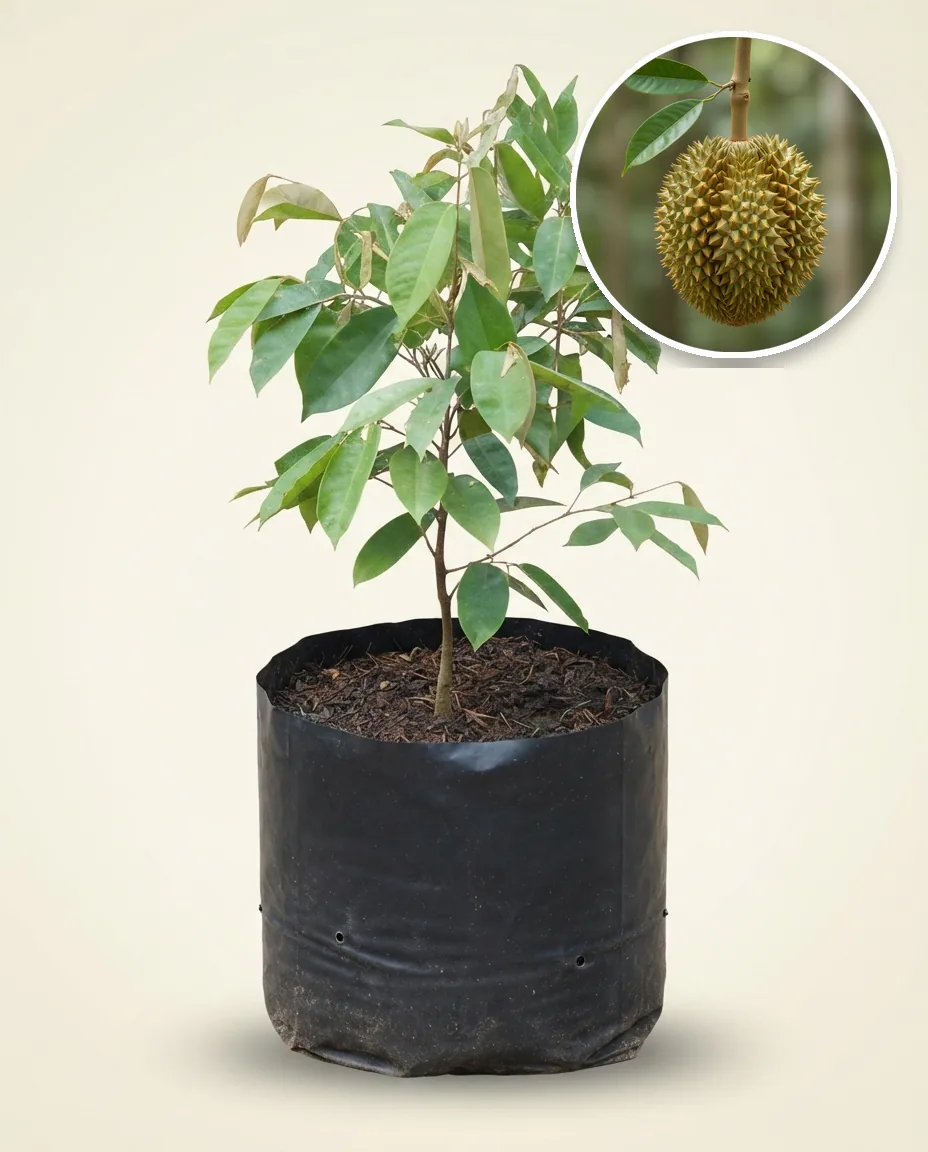
Durian Red 2
Origin: Java & Sumatra, Indonesia
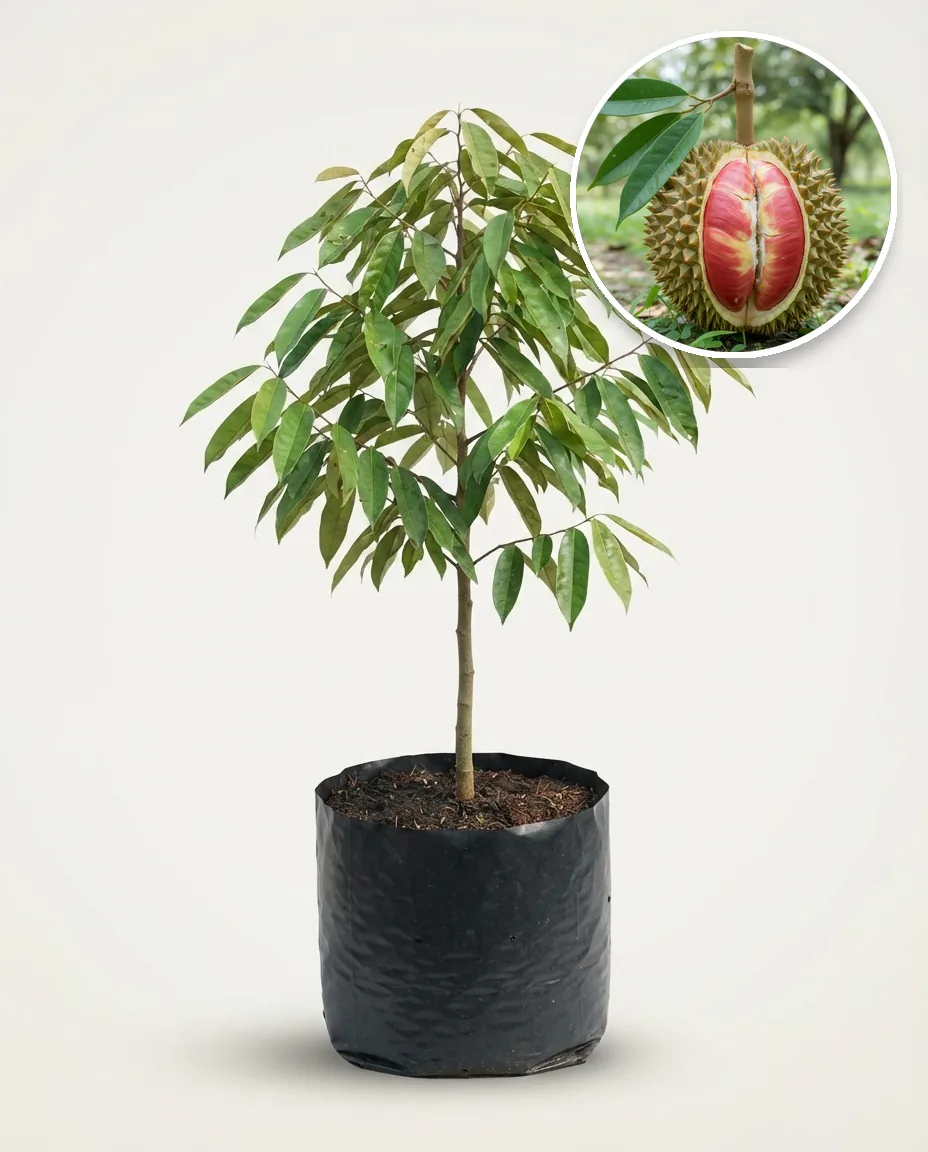
Durian Rainbow 2
Origin: Java & Sumatra, Indonesia
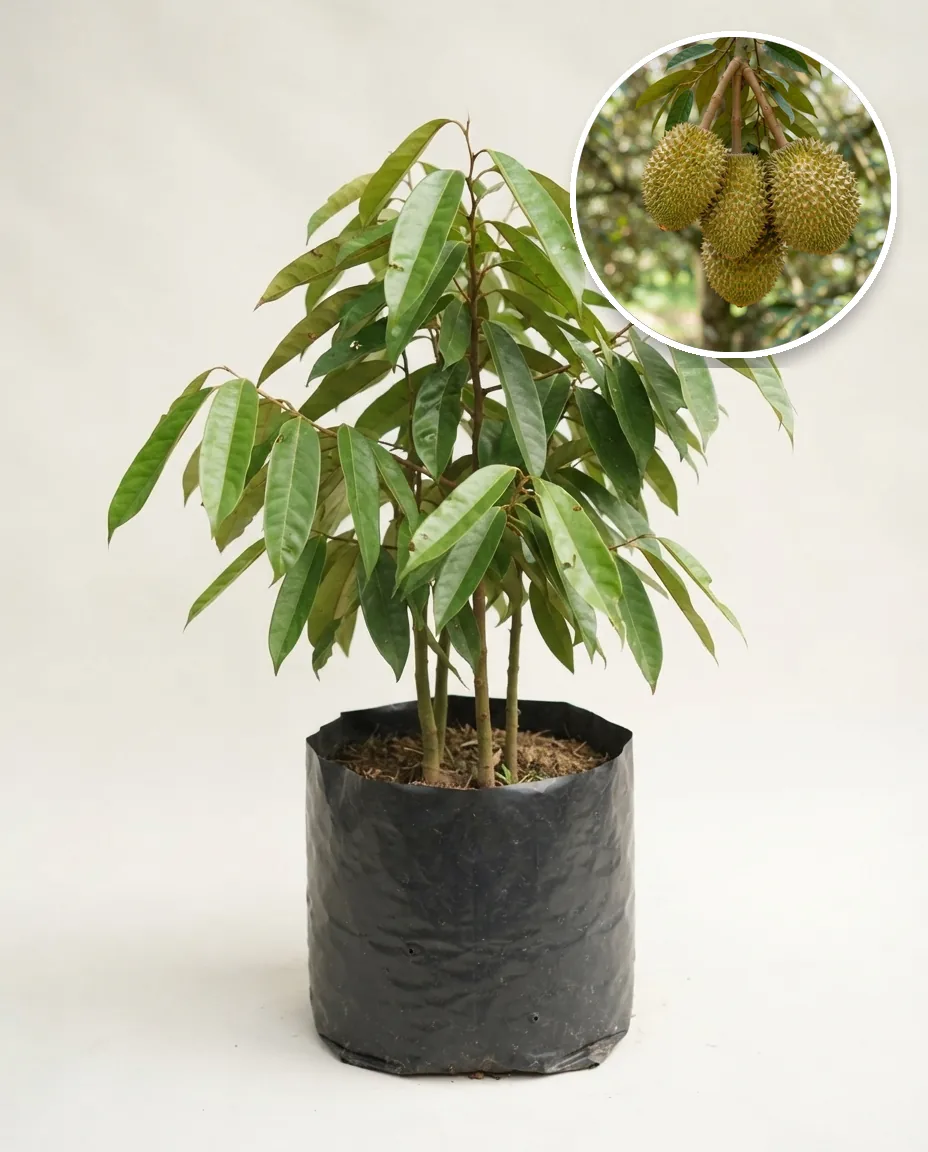
Durian Petruk 2
Origin: Java & Sumatra, Indonesia
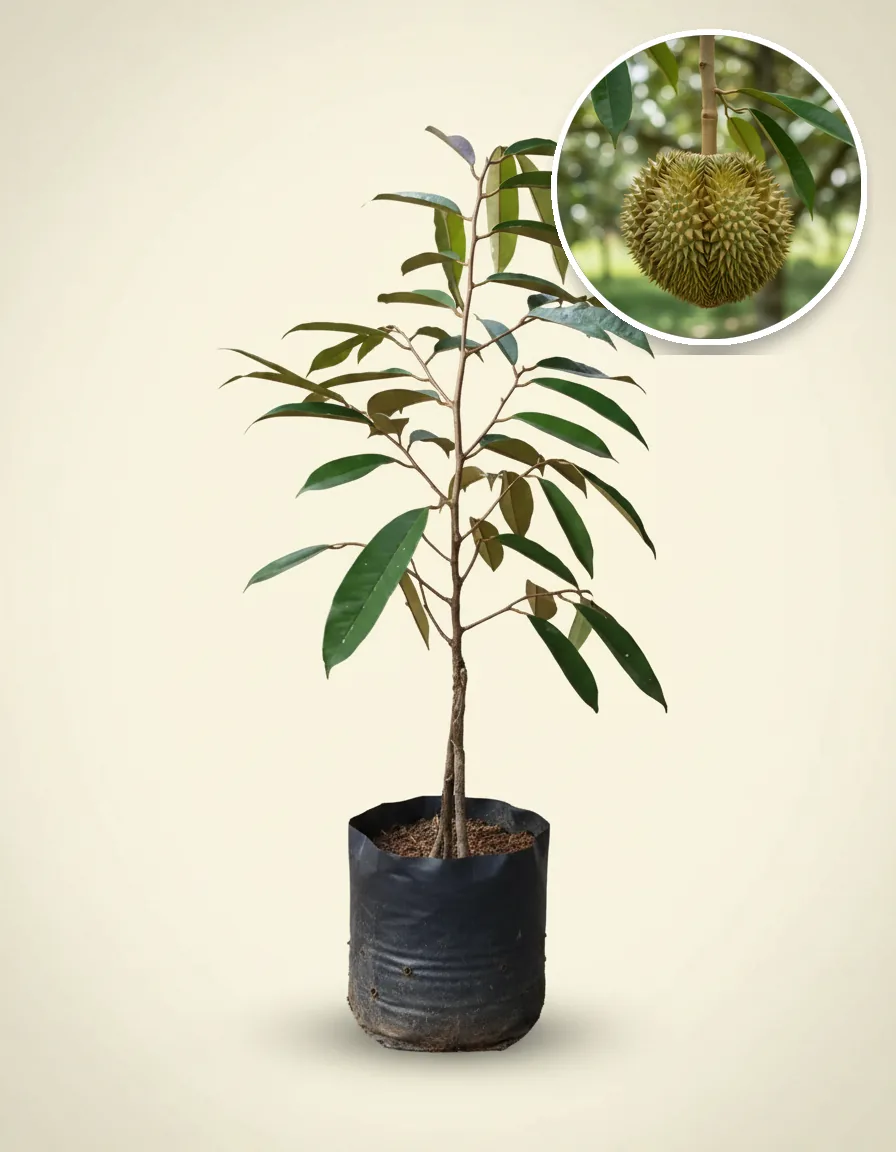
Durian Musangking
Origin: Java & Sumatra, Indonesia
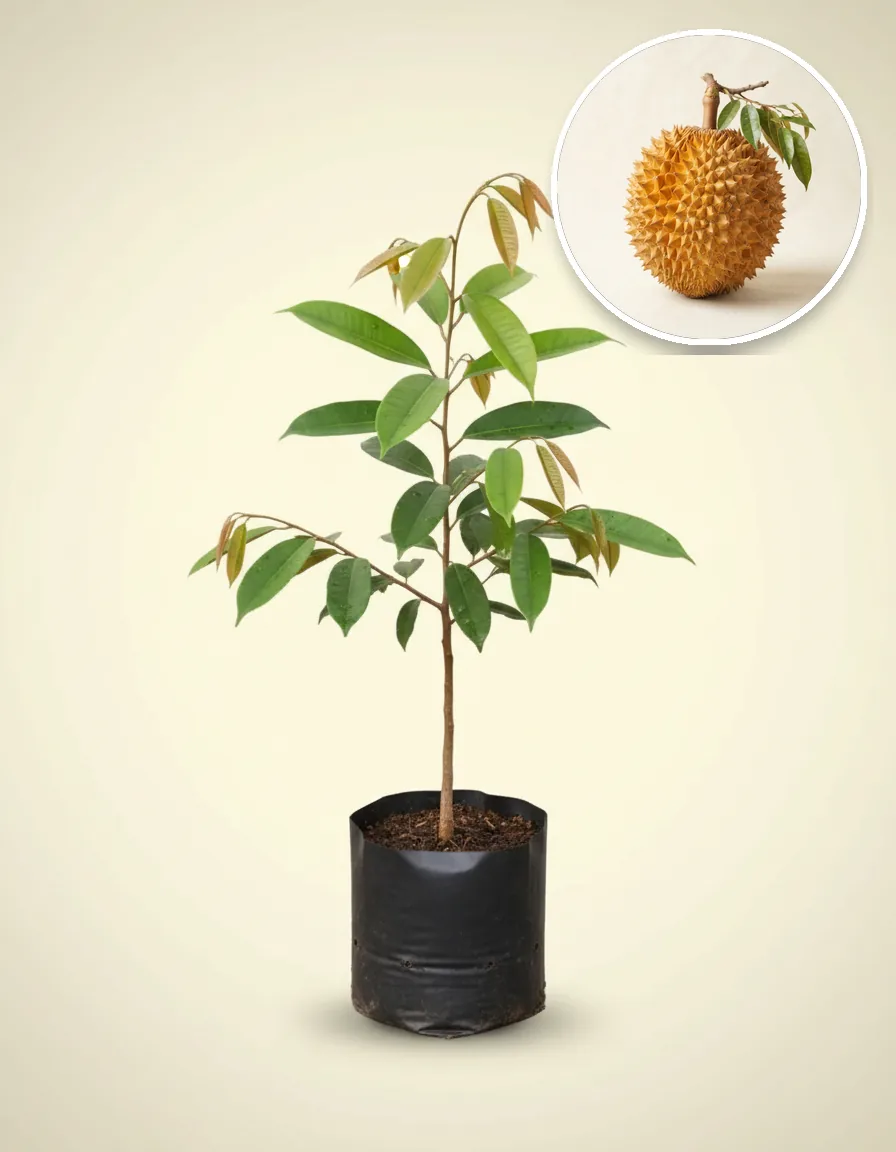
Durian Lay 2
Origin: Java & Sumatra, Indonesia
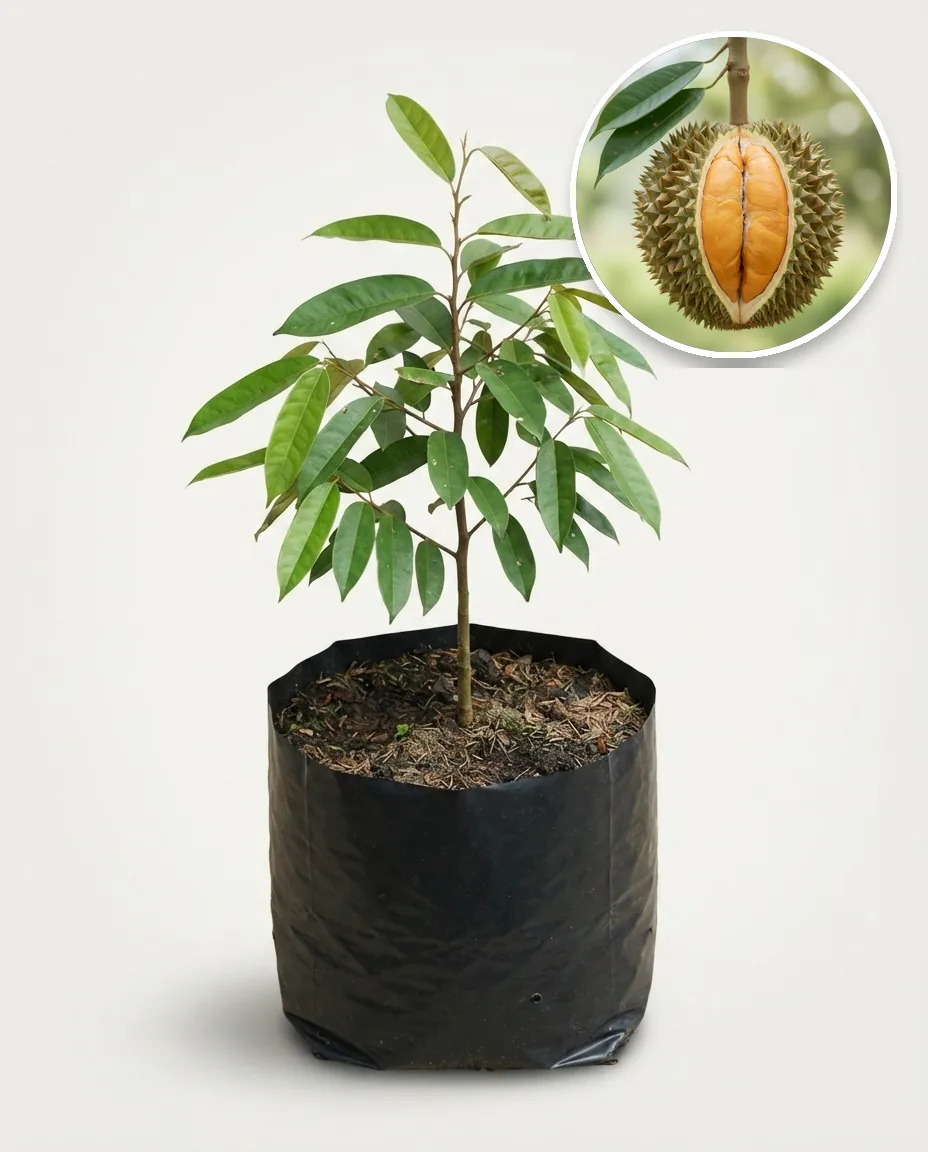
Durian Black Thorn
Origin: Java & Sumatra, Indonesia