Monstera karstenianum Care Guide
Monstera Karstenianum Var — Araceae family, grown in our East Java nursery and shipped bare-root. Light, water, humidity, substrate, temperature, propagation and what happens to the plant in transit, in one place.
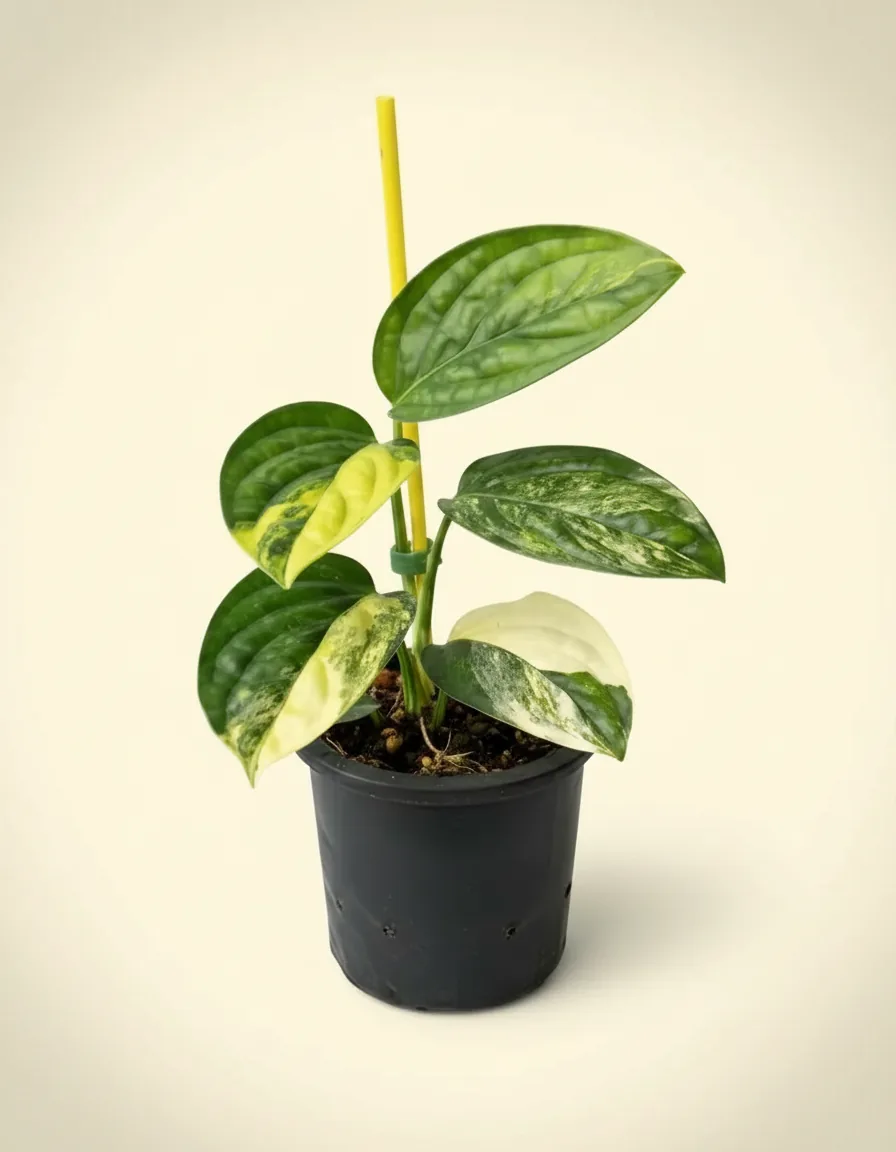
The silver is the whole product. Karstenianum carries a narrow, slightly cupped blade that hangs rather than faces out, and the variegated form lays irregular silver-white patches along the midrib until the leaf looks hammered rather than painted. It sells in the trade as one of the Peru monsteras, which is why the two get confused, and the giveaway is leaf shape: this one folds and dangles, the Peru holds a flatter oval. Collectors want it because the marbling shifts from leaf to leaf. A strong plant looks lacquered from across a room and chalked up close, and it does not photograph the same way twice.
Growing Monstera karstenianum
- LightBright filtered lightBright filtered light keeps the silver patches distinct; in shade they blur into the green and the leaf loses the metallic sheen that makes it worth growing. Direct sun through glass takes that sheen off entirely and leaves the margins papery. East light or a bright north room is close to ideal.
- WaterLet the top third of the mix dry between wateringsLet the top third dry, and the leaf tells you plainly when you get it wrong: overwatering shows as dark spots spreading from the margin inward, underwatering as a dull matte surface. Water thoroughly until it drains, and never leave the pot standing in a full saucer, which undoes the whole point of a chunky mix.
- Humidity55% – 75% relative humidity once acclimatisedIt is happiest in the middle of that band. New leaves emerge tightly rolled and already marked, and at low humidity they open with a dry brown tip that never fills in. Air movement matters as much as the reading, because still warm air holds condensation on the blade and the marbling spots underneath it.
- SubstrateChunky aroid mix — bark, perlite and coco coirBark, perlite and coco coir, coarse enough that water runs straight through on the first pour. The roots are thick and hug the surface, and a dense mix smothers them before it ever dries. A shallow pot with generous drainage suits it better than a tall one, and the mix should be replaced rather than topped up once it breaks down.
- Temperature18 °C – 30 °C18 °C – 30 °C, with a preference for the middle. The leaf is thin for a Monstera and marks at both ends of the range: cold nights against glass leave pale patches, and dry radiator heat browns the margins within days. Steady warmth with moving air keeps the silver tissue intact through winter.
- PropagationStem cuttings with a node and an aerial rootA stem cutting with a node and an aerial root roots in damp sphagnum in three to five weeks, and the aerial root does most of the work while it stays in contact with the moss. Cut a section with one leaf, bury the aerial root tip, and leave the node at the surface. Pot up once the new roots run a few centimetres.
The habit is semi-epiphytic — it climbs a little and hangs a lot, and the leaves dangle from a stem that would rather drape over a pot rim than stand upright. New leaves arrive rolled and silver and take a week or two to flatten. It does not flower indoors in any way worth planning around. The fussy part is the surface, which marks from overhead watering, cold glass and dry heat; the forgiving part is a thick root system that rides out a dry week without dropping leaves, or sulking for a month after a move.
Bare-root export and transit
For export the plant is lifted and the substrate washed completely away, then the crown is dipped in anti-fungal and bactericide solution and the roots wrapped in sterile Chilean AAA damp sphagnum. The narrow folding leaves pack without creasing inside an EPS-insulated box in a corrugated carton, and internal temperature holds at 18 °C – 24 °C against 18 °C – 32 °C in the nursery, at 70% – 85% RH. The sealed climate box covers a 7 – 10 day crossing, and a bare-root plant that lands inside it is still holding moisture at the roots.
How every consignment is prepared
- Root preparation100% Bare-root washed (zero soil, zero unsterilized peat).
- TreatmentSystemic broad-spectrum anti-fungal & bactericide dip treatment.
- Root wrapSterile Chilean AAA damp sphagnum moss protective root-envelope.
- Dispatch conditions to confirmConfirm root condition, packing method, route and arrival checks for Monstera Karstenianum Var. Transit estimates are planning information; recovery depends on stock condition and the receiving environment.
Questions buyers ask
Is this the same plant as Monstera peru?
Closely related and often sold under the same trade name, but not identical. Karstenianum carries narrower, folding leaves with silver concentrated along the midrib, while the Peru form holds a flatter, more oval blade. Compare leaf shape rather than the label when you buy.
Why are the silver patches different on every leaf?
The marbling on this species is unstable and shifts with each new leaf, so variation is expected rather than a problem. Patches can be heavy on one blade and almost absent on the next. Consistent light and steady warmth give the most silver; shade reduces it over a season.
What do black spots on the leaf mean?
Usually water sitting in the mix too long rather than disease. Spots that start at the margin and spread inward point at a pot that is not draining. Let the top third dry before the next watering, check the drainage holes, and stop misting the foliage while the spots are spreading.
Order Monstera Karstenianum Var
You receive bare-root plants at export grade A+, washed free of substrate, with the roots wrapped in damp sphagnum and the whole plant sealed in an insulated climate box. Minimum export order is 20 plants, volume discounts from 30 plants, and freight is quoted per volumetric box on the shipping page.
The commercial pages behind this guide
- How to import plants from IndonesiaThe full document-to-door sequence: bare-root preparation, Barantan certification, destination permits, inspection and arrival.
- Estimated shipping ratesFreight basis and indicative transit for a consignment, with the variables that move the price.
- Wholesale termsMinimum order, volume tiers, deposit, the document set, and the split of responsibility between exporter and importer.
- Live arrival guaranteeWhat the guarantee covers and how to report condition within the arrival window.