Colocasia bagaskara Care Guide
Colocasia Bagaskara — Araceae family, grown in our East Java nursery and shipped bare-root. Light, water, humidity, substrate, temperature, propagation and what happens to the plant in transit, in one place.
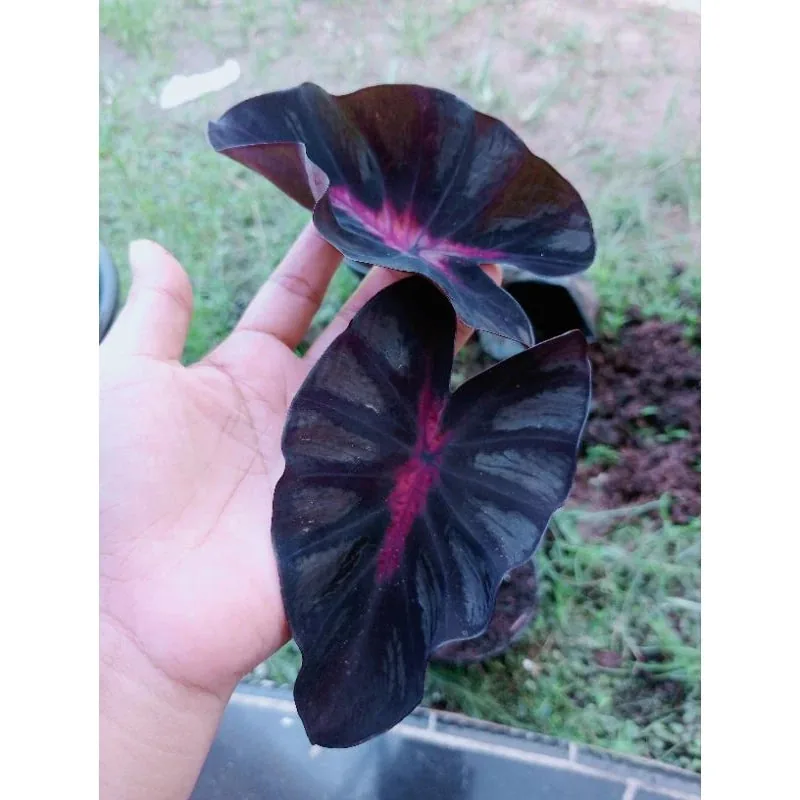
Colocasia bagaskara is bought for a leaf that looks engineered: a peltate blade, dark and shield-shaped, with a pale central zone where the petiole meets it, so the whole leaf reads as a target seen from below. Peltate means the stem attaches inside the blade rather than at the edge, and that detail is what gives the plant its silhouette — the leaf hangs like a plate on a stem, moves in any air, and catches water. Growers want it because it looks like nothing else in the tropical group, and because a full-grown plant is a structural object rather than a shelf ornament.
Growing Colocasia bagaskara
- LightBright light to gentle sun; it needs more light than a houseplant usually getsBright light to gentle sun, which is more than a houseplant shelf delivers. An outdoor position with morning sun and afternoon shade is the realistic home for it; indoors it wants the brightest window in the building and still leans toward the glass.
- WaterKeep the soil permanently moist; it tolerates standing water at the baseKeep the soil permanently moist, and do not be alarmed by water standing in the saucer or the base of the pot. This is the one plant here that drinks like a bog species. Dry soil collapses the leaf in an afternoon, and a collapsed petiole does not lift again.
- Humidity70% – 85% relative humidity once acclimatised70% – 85% is what it wants, and it is the only species in this group genuinely unhappy below 60%. Outdoors in warm, humid weather it takes care of itself; indoors it needs a grouped shelf or a humid room, and the leaf margins are the first place to show the shortfall.
- SubstrateRich, moisture-retentive soil with compost and peatRich, moisture-retentive soil with compost and peat, and no perlite-heavy aroid mix. It is a marginal plant in habit, not a canopy epiphyte: the roots want a substrate that stays wet without going sour. A pot with a saucer it can sit in beats a free-draining mix for this species.
- Temperature20 °C – 32 °C20 °C – 32 °C, and it wants the top of that range through summer. Below 20 °C it stops, and a cool winter pushes it into dormancy — the leaves go over and the plant returns from the cormel cluster in spring. Warmth is the variable worth managing.
- PropagationCormel division while the plant is dormantLift the plant while it is dormant and divide cormels from the cluster, then replant each one. Doing it in dormancy means you are handling a bare cormel rather than a plant in full leaf, which is why the division survives where an in-leaf separation often does not.
It is a seasonal plant, and the season is what decides whether it thrives: in warmth it pushes leaf after leaf from the cormel cluster, and in a cool winter every leaf goes over and the pot looks finished. It is not. The plant is resting, and it returns from the corms when the temperature climbs. Its other demand is light — bright light to gentle sun, more than a houseplant shelf gives — so it belongs outdoors or in the brightest, warmest room. Outdoors, it is the sort of plant that gets a comment from a passer-by.
Bare-root export and transit
Export is done bare-root, and this species tolerates it because the cormels carry the plant rather than the canopy. The cluster is lifted, washed free of soil, dipped in an anti-fungal and bactericide solution, and wrapped in sterile Chilean AAA damp sphagnum; the roots here dry faster than those of a chunky-mix aroid, so the wrap matters more than anywhere else in this group. The wrapped plant goes into an EPS-insulated box inside a corrugated carton, which holds 18 °C – 24 °C and 70% – 85% relative humidity across the 7 – 10 day sealed window. Pot the cormels into wet, rich soil on arrival and keep them warm.
How every consignment is prepared
- Root preparation100% Bare-root washed (zero soil, zero unsterilized peat).
- TreatmentSystemic broad-spectrum anti-fungal & bactericide dip treatment.
- Root wrapSterile Chilean AAA damp sphagnum moss protective root-envelope.
- Dispatch conditions to confirmConfirm root condition, packing method, route and arrival checks for Colocasia Bagaskara. Transit estimates are planning information; recovery depends on stock condition and the receiving environment.
Questions buyers ask
Why does my Colocasia bagaskara lose every leaf in winter?
Because it is seasonal and the cool season sends it dormant. The leaves go over, the pot looks empty, and the plant returns from the cormel cluster once the temperature is back above 20 °C. Keep the soil just damp, not soaking, while it rests.
Can it live indoors on a normal windowsill?
Only in a very bright, warm room. It wants bright light to gentle sun, more than a houseplant shelf delivers, plus 70% – 85% humidity and a soil that never dries. A dim sill shortens its season; outdoors in warmth, or a bright conservatory, is the realistic placement.
How does a moisture-loving Colocasia travel bare-root?
Better than the leaf suggests, because the cormel cluster is what ships. It is washed free of soil, dipped and wrapped in sterile damp sphagnum inside an insulated box that holds a 7 – 10 day window, so the roots do not dry on the way. Pot on arrival into wet, rich soil.
Order Colocasia Bagaskara
Shipped bare-root, washed free of soil, graded A+ and wrapped in sterile damp sphagnum inside a sealed, insulated box with a 7 – 10 day transit window; the cormel cluster is what arrives. Minimum export order is 20 plants, volume discounts start at 30, and freight is quoted per volumetric box on the shipping page.
The commercial pages behind this guide
- How to import plants from IndonesiaThe full document-to-door sequence: bare-root preparation, Barantan certification, destination permits, inspection and arrival.
- Estimated shipping ratesFreight basis and indicative transit for a consignment, with the variables that move the price.
- Wholesale termsMinimum order, volume tiers, deposit, the document set, and the split of responsibility between exporter and importer.
- Live arrival guaranteeWhat the guarantee covers and how to report condition within the arrival window.